Category: Brice

  • Electricity Comes to Brice

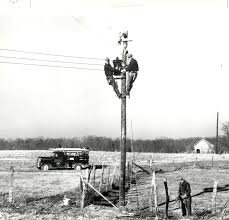
    Rural Electric Installation

    Electricity Comes to Brice

    Knob-and-Tube Wiring

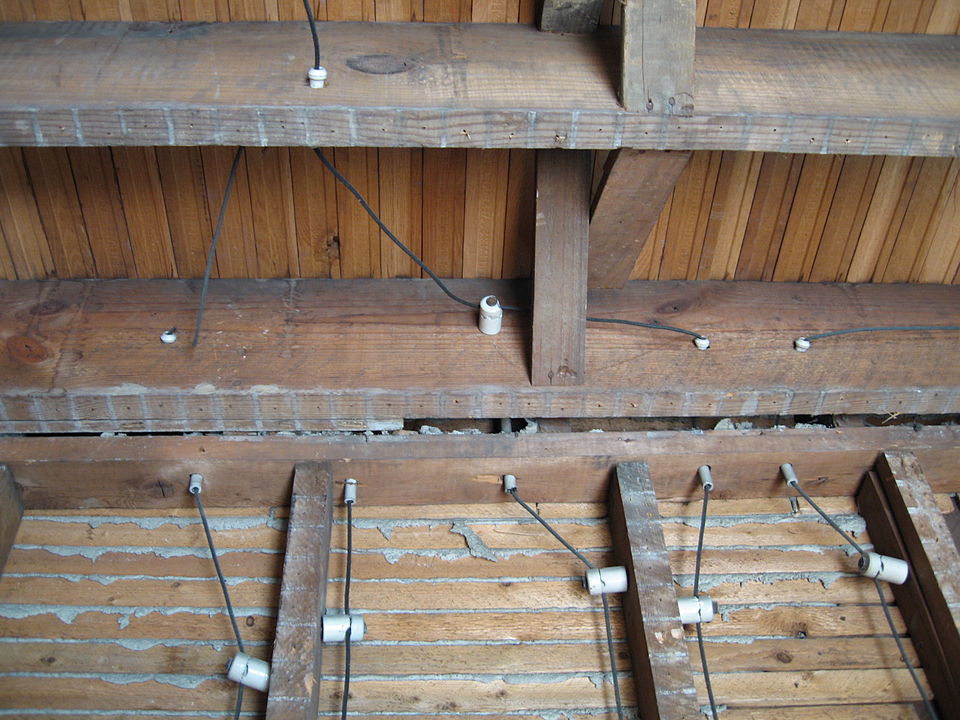
    Cloth-covered wires and white ceramic pieces were part of knob-and-tube (K&T) wiring, used roughly from the 1890s through the 1930s — longer in rural areas like Texas. The ceramic insulators were attached with ceramic knobs that were screwed directly into wall studs, rafters, or joists using wood screws or nails. Ceramic tubes were inserted into holes drilled through framing members so the wire could pass safely through wood without touching it. The ceramic material was porcelain or glazed clay — non-conductive, heat-resistant, and durable.
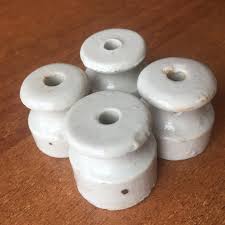
    Ceramic Insulators
    Ceramic Insulators

    The goal wasn’t concealment. It was separation. Hot wire and neutral were run several inches apart. Air acted as insulation and cooling, and fire risk was reduced (by the standards of the time). Walls were often left open, or wiring was run on the surface.

    Cloth-Insulated Wire

    Early electrical wire consisted of three main elements. The conductor was solid soft-drawn copper that could be bent by hand; not stranded and was relatively thick by modern standards.
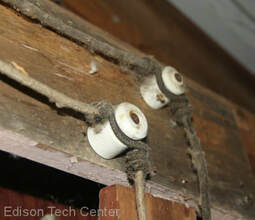
    Indoor Wiring
    Indoor Wiring

    The insulation cotton, linen, or rayon threads braided or wrapped tightly around the copper. It was often impregnated with asphalt, tar, shellac, or natural rubber. This gave the wire flexibility, some moisture resistance, and a characteristic darkened, fabric texture. Sometimes there was an outer finish of waxed or varnished cloth. Occasionally, it was color-coded, but often just dark brown or black. Over decades, heat and oxidation made the insulation brittle, which is why old wiring can crumble when touched today.

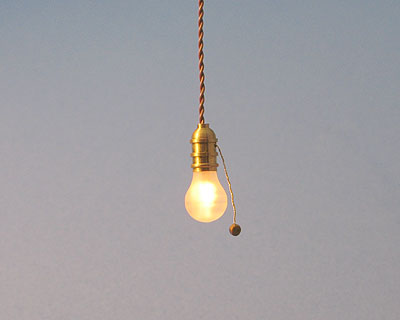
    Bare Bulbs and Pull Chains: Light Without Mediation

    Bare bulbs was the common standard. The fixtures were porcelain sockets with no shades and no diffusers. A simple pull-chain switch completed or broke the circuit. The light was functional, not decorative.
    Bare Light Bulb
    #image_title

    After oil lamps, electric light felt violent, unreal, and almost holy. Coal-oil lamps had produced a warm, flickering light, low intensity with shadows and darkness as companions. Early bulbs produced a steady, shadow-killing brightness with no flame, no smell, and no ritual of trimming wicks or refilling fuel. Many people reported difficulty sleeping at first — daylight had invaded the night.

    AC or DC?

    During the introduction, DC (Direct Current) systems dominated. Thomas Edison strongly favored DC; however, DC worked well only over short distances. AC (Alternating Current) could be stepped up to high voltage, transmitted long distances, then stepped down safely. Transformers made rural electrification possible. By the time rural Texas was electrified, it was almost certainly AC, typically 110–120 volts, single-phase 60 Hz frequency (standardized in the U.S.).

    How Electricity Reached Rural Areas

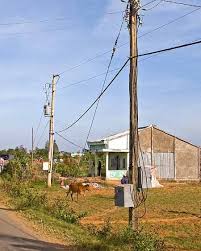
    Before the Rural Electrification Administration (REA) in 1935, power generation was done in small, local power plants. They were usually steam turbines driven by coal, oil, and sometimes even wood. Later, hydroelectric plants were built in some regions with access to water.
    Rural Electric Lines
    Rural Electric Lines

    Distribution

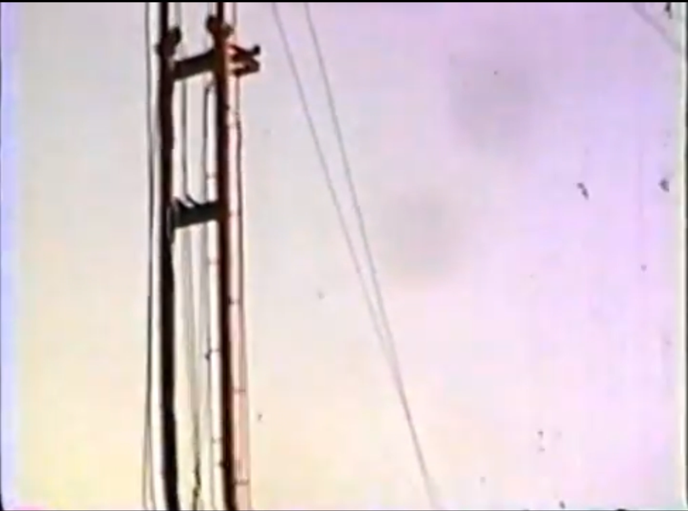
    Electricity was distributed by wooden poles with bare copper or aluminum conductors. There was minimal insulation (air was the insulator) that covered long distances with frequent voltage drops. Many rural homes didn’t get electricity until late 1930s, 1940s and even early 1950s in some parts of Texas. The REA funded cooperatives, standardized wiring and safety, and brought power to farms that utilities deemed “unprofitable”.

    Other Fascinating Aspects of Early Home Electricity

    There were no outlets at first. Early systems powered lights only; appliances came later. Typically there was only one ceiling bulb per room.
    #image_title

    At first, electricity was mysterious — and feared. People worried it would leak into beds, cause illness, or attract lightning. Insurance companies often refused coverage at first The fire risk was real — but accepted. Homes already had open flames, chimneys, and oil lamps, so electricity felt cleaner, even if imperfect

    For decades, houses used electric lights (with oil lamps as backup), wood stoves and hand pumps all at once — a technological mosaic, not a clean break. The introduction of electricity was a threshold moment. Night stopped being absolute, homes no longer slept with the sun, and darkness became optional.

    Electricity didn’t arrive as convenience. It arrived as astonishment. Electricity didn’t merely add light — it re-tuned time itself, especially on farms where daylight had long been the master clock.


    Other dirt roads to travel:

    This is a time when electricity exists, but not in abundance. Clothes dryers are unnecessary or uneconomical. The sun and wind are still collaborators.
    Grandma Hanging Clothes

    Radio and electric light did not politicize rural America in a crude sense. They did something quieter; they trained people to listen together.
    Electricity and the Inner Life

    If daylight was a global rhythm, electric light introduced local control. An electric switch is a hinge between nature, intention, and given time or chosen time.
    When the Sun Was the Clock
  • Hoeing Cotton

    Far away tractor in the field

    Hoeing Cotton

    The Work Without Pictures

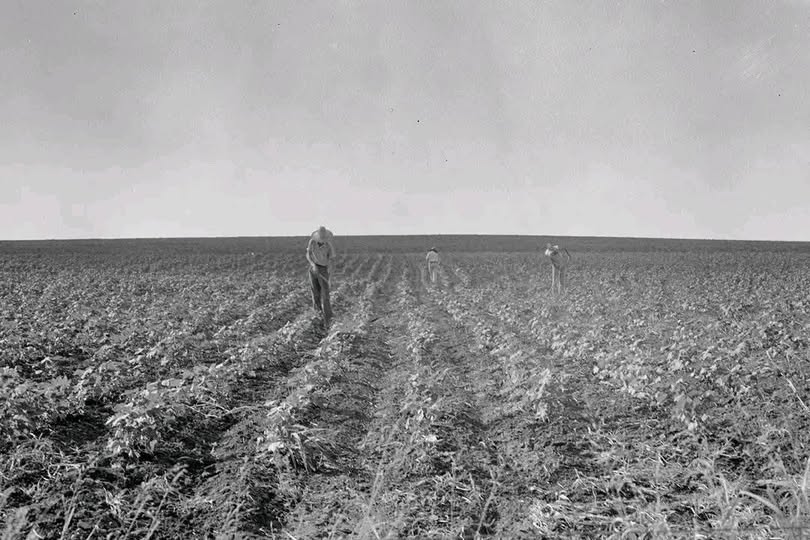
    A regular farm activity the entire family would participate in was hoeing cotton. This was usually done in the heat of summer and the middle of the growing season.

    Hoeing in a field
    Hoeing in a field

    Hoeing was a manual, labor-intensive task used to control weeds and thin the cotton plants. This task was widespread, and was performed during the hot summer months. This was before plastic, so water was carried to the field in glass gallon bottles wrapped in burlap sacks. They also used cloth water sacks; evaporative cooling/sweating in the heat kept the water drinkable. By midday, the water would be warm — but it was life.

    Some memories of work live only in the body. It feels heat pressing down, rows stretching forward, glass bottles of water warming by noon, and the rhythm of step, swing, clear, move. Everyone helped. Not because it was romantic — because that’s when the crop decided what it would become.

    Key aspects

    This was manual labor at a most basic level. Workers used long-handled hoes to chop weeds around the delicate cotton plants, a physically demanding process often referred to as “chopping cotton”. This was usually a family and community effort: This work frequently involved entire families, including women and children, working long hours in the fields. While some plowing and planting provided some mechanization for farming, the precise task of weeding around individual plants often still required human hands. If there were not too many weeds, some people would chop more than one row per pass through the field.

    This era marked a transitional period as technological advancements began to transform agricultural practices, moving away from reliance on extensive manual field labor.


    Next dirt roads to travel:

    Morning and evening moves of irrigation sprinklers dictated time discipline. This is where farming stopped being seasonal and became continuous responsibility.
    Moving Pipe

    “Harvest time.” Two words. No elaboration needed. That implied that everyone in the room understood the stakes. Because the harvest was urgent.
    Pulling Cotton

    YouTube videos of irrigation.
    Channel 2 – Irrigation

  • Meeting at the Broken Bridge

    Meeting at the Broken Bridge

    After the bridge washed out,
    it did not disappear all at once.

    It stayed—
    in ribs of timber,
    in teeth of iron,
    in a memory of where crossing used to be possible.

    1951, or close enough that the number doesn’t matter.
    What mattered was that wheels stopped where feet continued.

    On one side of the river lived your great-grandfather,
    still “Brice” by mail,
    still Antelope Flat by body and breath.
    On the other side lived family, errands, town, and time.
    The address stayed put.
    The river did not.

    When the bridge failed, it didn’t end visiting.
    It revised it.

    Cars came as far as they could.
    Engines cooled.
    Doors opened.
    People stepped out into weather and distance.

    If the phone worked—and sometimes it did—
    a call went through crackle and luck:
    We’re coming over.
    Meet us at the bridge.

    That word did the work the bridge no longer could.

    They parked on their side.
    Granddad parked on his.
    And between them was the river,
    reduced—by drought, by season, by familiarity—
    to something a person could walk.

    Children crossed first.
    They always do.

    Feet learned the stones.
    Hands reached for balance.
    The river was not an obstacle;
    it was a pause—
    a shared inconvenience that taught patience.

    Business was conducted standing up.
    News was exchanged with coats still on.
    Laughter crossed more easily than freight ever had.

    Sometimes the phone was down.
    Sometimes it shorted out in weather or time.
    Then the bridge had to be trusted in a different way—
    as a place someone might be
    because it had always been a place someone went.

    So they showed up anyway.

    This is how infrastructure degrades in human memory:
    not as failure,
    but as adaptation.

    The bridge did not vanish.
    It thinned into ritual.

    A meeting point instead of a passage.
    A promise instead of a convenience.

    And the river learned to listen—
    to voices calling across it,
    to footsteps that knew exactly where to land,
    to the quiet understanding that
    we will meet you as close as we can
    is sometimes the most faithful sentence people can offer each other.

    No monument marks this arrangement.
    No sign records it.
    But it happened.

    And because it happened,
    the bridge—broken though it was—
    still did what bridges are meant to do.

    It connected.


    Next dirt roads to travel:

    Lyrical essays are an intentional contrast to analytical essays. Lyrical essays border on poetry. However, the intention is the same; to inform and to encourage thought.
    Lyrical Essay

    The land did not ask to be conquered. Rows were drawn not as lines of dominance but as agreements with wind and water, with what would grow if given half a chance.
    Rows and Rooms

    There are places that never learned how to stay on a map. They lived instead in directions. Named by distance, memory, and need. 23 miles northeast of Silverton.
    23 Miles NE of Silverton

  • Windmill Drilling

    Windmill Drilling

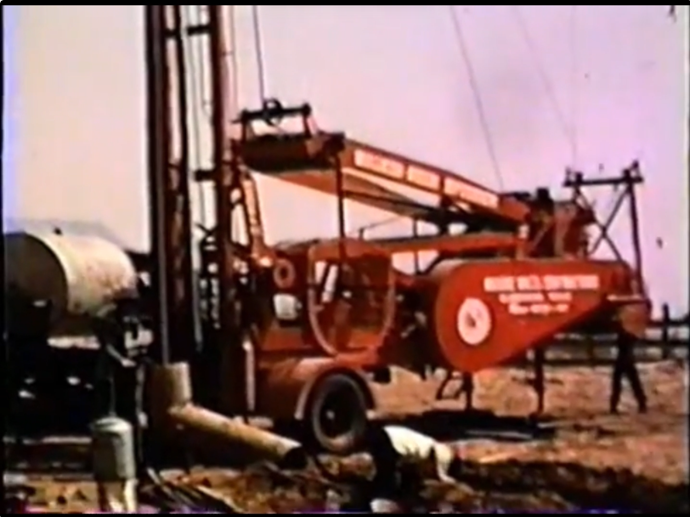
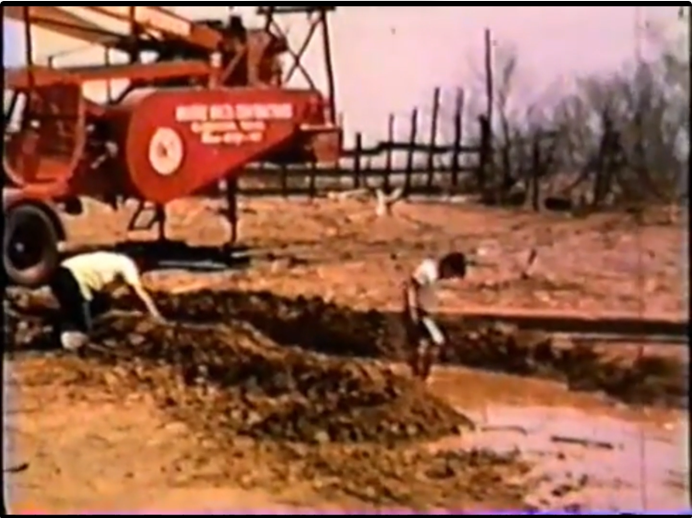
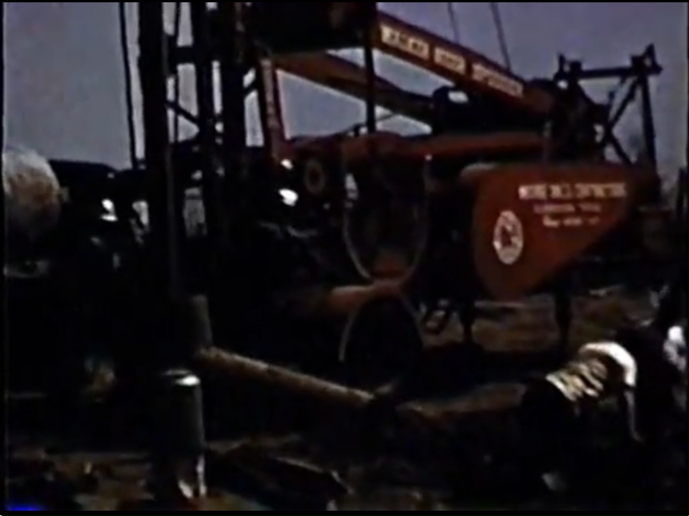
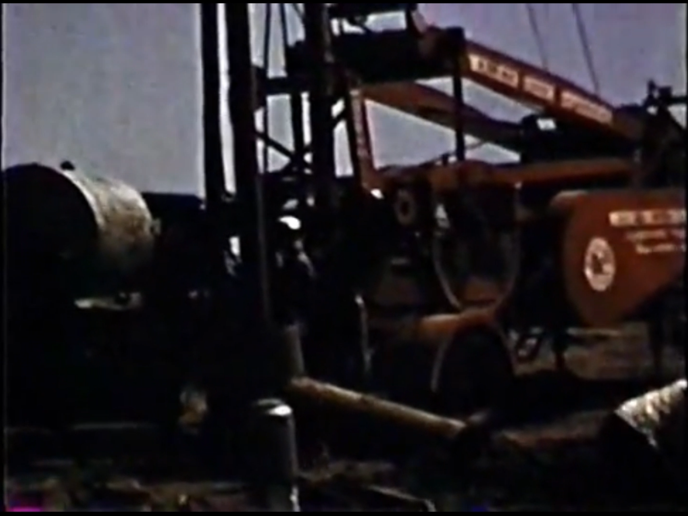
    Water windmills were vital in the 1950s Texas Panhandle for providing water in remote areas Thousands operated for cattle and homes, with brands like Aermotor and Star dominating, providing a distinctive sound and essential water source for residents until modern solar pumps started replacing them later. 

    This shows the windmill being drilled on the home place. Before this, water had to be hauled, and heated by fire. After the windmill was in place, water was drawn, time reclaimed, and labor redistributed. The windmill was not progress, it was relief.


    Next dirt roads to travel:

    Water arrived by effort. It did not come to the house; it was invited, persuaded, lifted. Essential. Life-giving.
    Water, With Hands

    In the Panhandle before widespread irrigation, farming was event-driven, not clock-driven. Rain determined not just yields, but moods, debts, and futures.
    The Arrival of Irrigation

    This is an exploration of the history of Brice, Lakeview, Clarendon, and Lakeview in the years between 1935-1960.
    Life in Brice and the Importance of Interdependence

  • Chicken Harvest

    Chicken Harvest

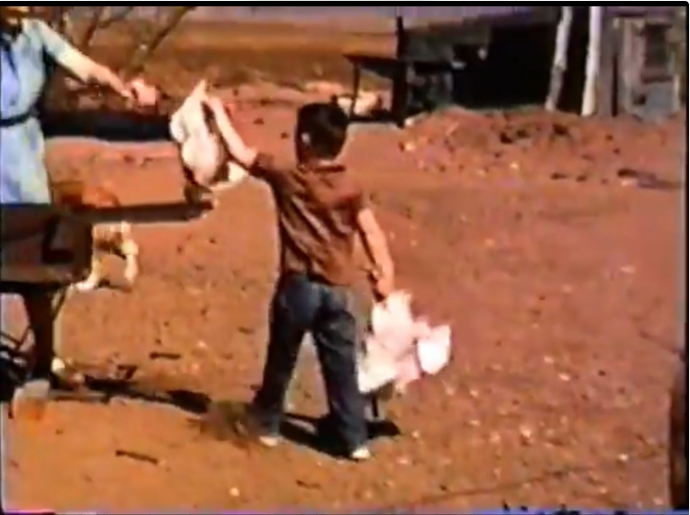
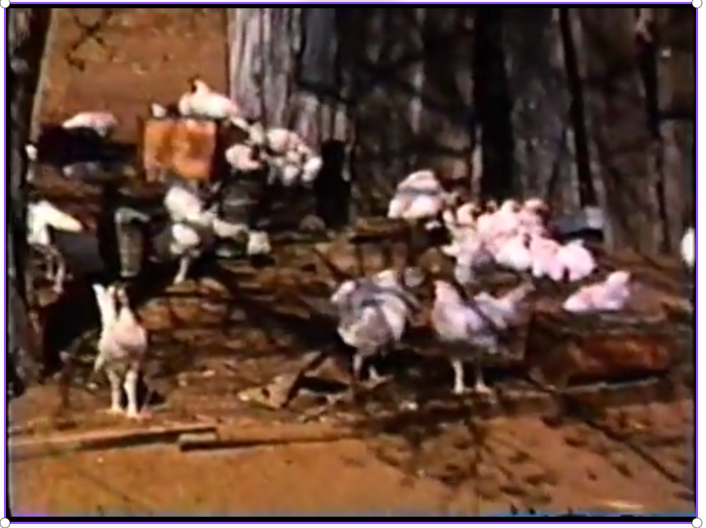
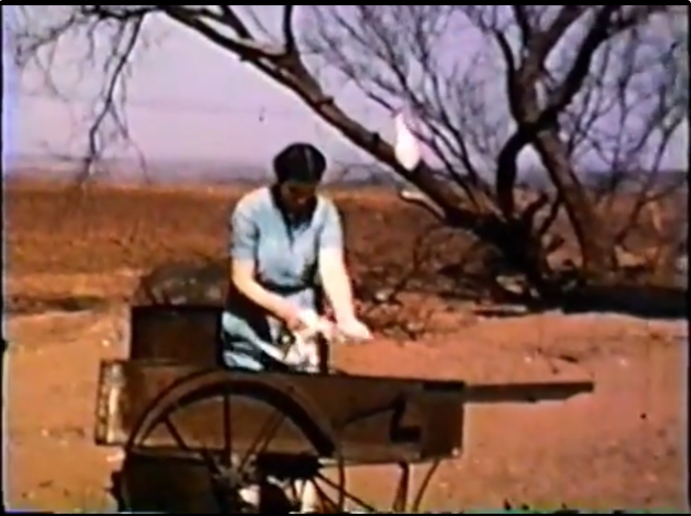
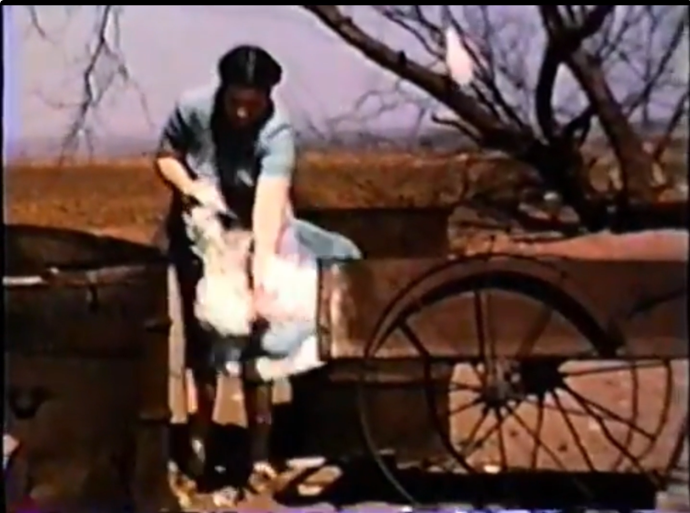
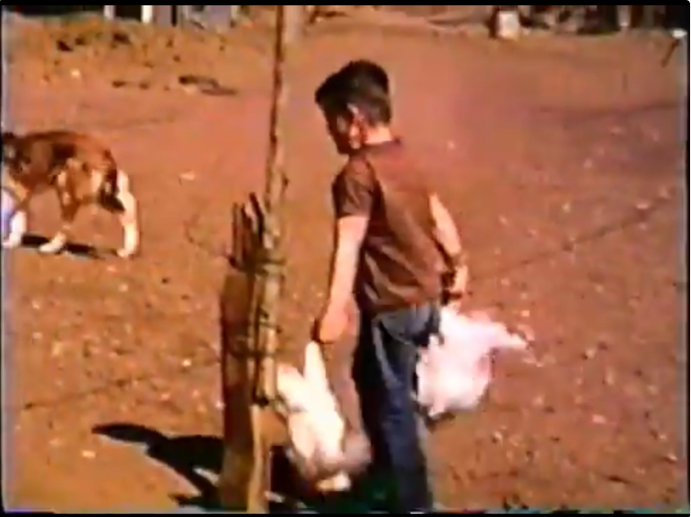
    This series of images needs no explanation. This says meat is produced, not purchased, death is part of provisioning, and food has a story, not a label.

    What the images show

    The images show a mixed flock; chickens in various stages, some already processed. It shows a simple outdoor setup: scalding pot, plucking, dirt yard. They show an adult working steadily, a child carrying chickens with purpose, not play. There is no spectacle, no sentimentality — just what must be done.

    Chicken harvest day
    Chicken harvest day

    In remembering how it used to be done, it is said “Before they used to pull all the feathers off and then singe.” That says that techniques evolved, labor became slightly less brutal, memory is being used to measure progress, and no one is pretending this work was ever cute. This isn’t nostalgia. It’s continuity without romanticism.


    And the child?

    The child isn’t shielded. They’re included — carefully, practically, without drama. That is a worldview — You belong here because this is where food comes from.

    Chicken harvest day
    Chicken harvest day

    This is quietly profound. It shows that food is processed where life is lived. Children are included, not shielded. There is no spectacle—just completion of a cycle. Nothing is hidden. Nothing is dramatized. That alone says volumes about values.


    Next dirt roads to travel:

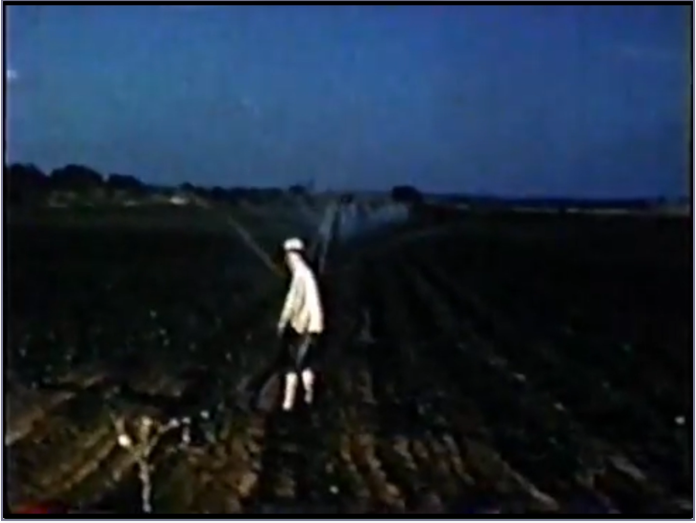
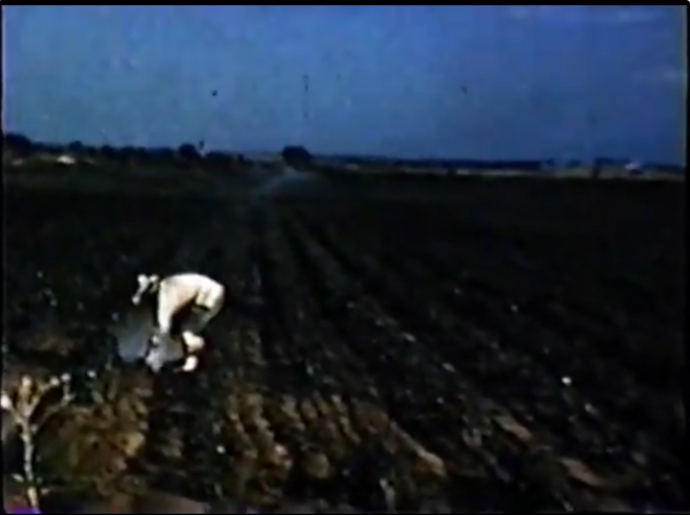
    The pictures were probably taken because irrigation was new enough to be notable.. Irrigation itself was the subject, not crops, not scenery, not people.
    Daily Irrigation

    This is a time when electricity exists, but not in abundance. Clothes dryers are unnecessary or uneconomical. The sun and wind are still collaborators.
    Grandma Hanging Clothes

    Everything visible serves shelter, fuel, food, or labor. This is not pioneer hardship or modern consolidation. This is a balanced system that is human-scaled.
    Grandpa’s Tractor and the Old Home Place

  • Moving Pipe

    Moving Pipe

    The Ogallala Aquifer, one of the world’s largest freshwater sources, lies beneath the U.S. Great Plains, serving as a vital water supply for agriculture, homes, and industry across eight states, It is rapidly depleting because withdrawals far exceed natural recharge, leading to “mining” of ancient water, threatening future sustainability and necessitating conservation efforts and smarter management to avoid severe impacts on rural communities and farming. The aquifer isn’t a cavern. It’s water held in sand and gravel.

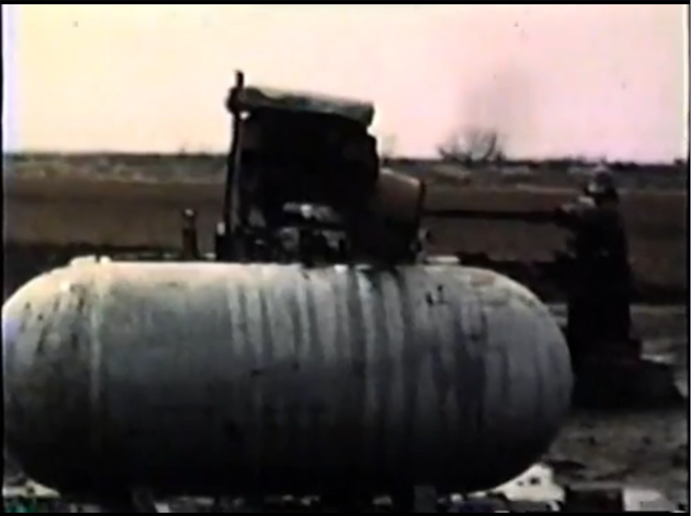
    Early wells often lacked modern screens, and high drawdown could pull sand into the line. Sand would accumulate invisibly until—suddenly—nothing wanted to move. Opening the end plug to flush the line wasn’t a workaround. It was a routine requirement with irrigation. Remembering pipes becoming too heavy to move tells us that labor was physical and shared. Irrigation didn’t eliminate hardship—it redistributed it across time.

    Sprinkler irrigation system
    Sprinkler irrigation system

    Irrigation, sand flushing, moving pipe

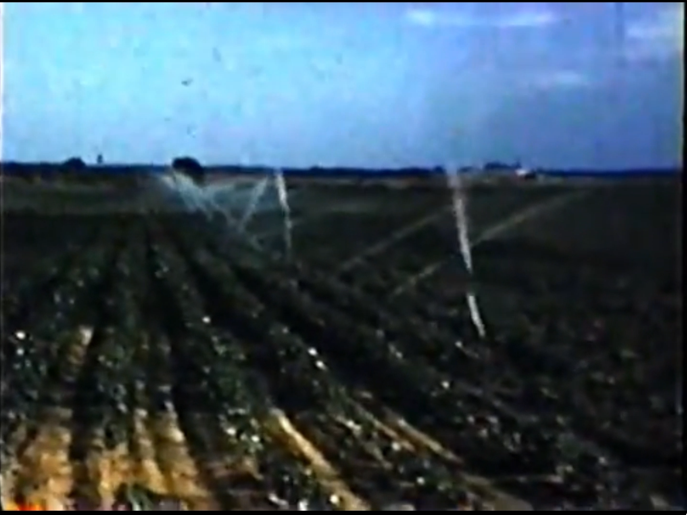
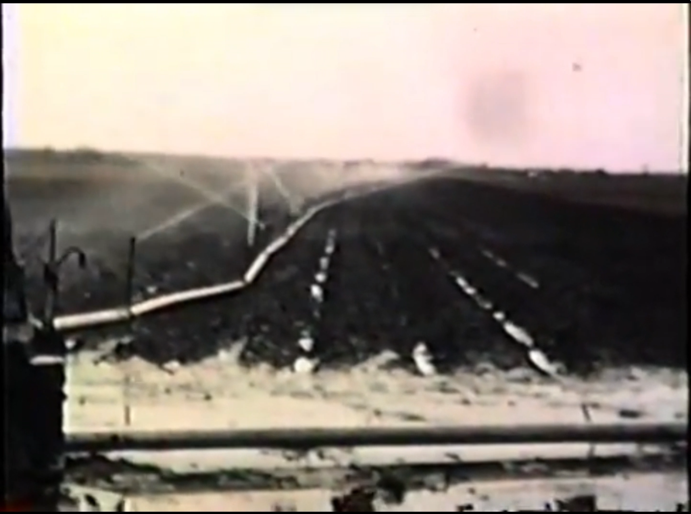
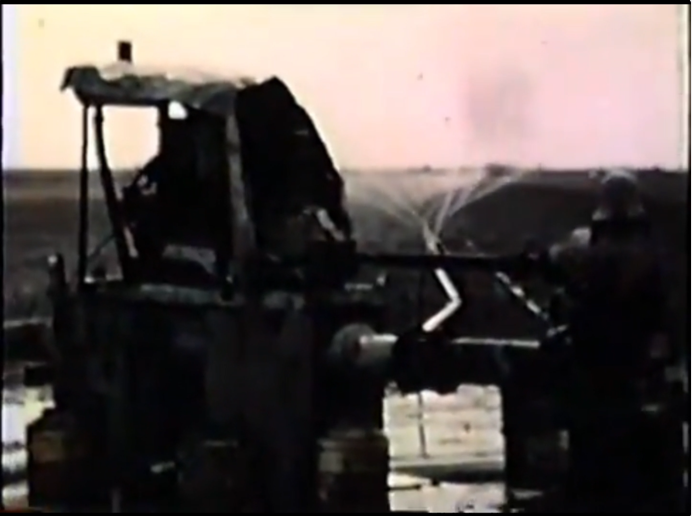
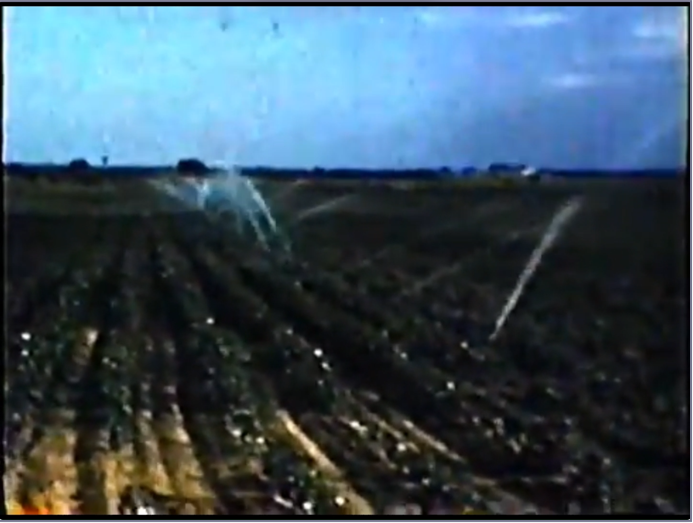
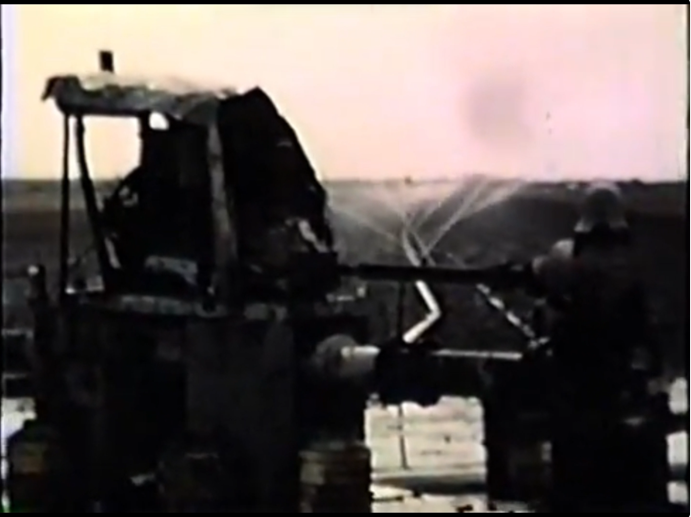
    Sprinkler irrigation led to control over water. Sand flushing created knowledge of the aquifer. Aluminum pipe required human-scaled infrastructure. Morning and evening moves dictated time discipline. This is where farming stopped being seasonal and became continuous responsibility. The family is the machine. No hired crews. No automation. Just bodies, timing, and attention.

    Moving the irrigation pipes
    Moving the irrigation pipes

    This was the pivot.– “Pivotal like a sprinkler head” — This is where weather stops being fate and becomes labor. These pictures are probably from about 1955. The pictures were probably taken because irrigation was new enough to be notable. (“I can’t imagine any other reason to be taking pictures of it”). Irrigation itself was the subject, not crops, not scenery, not people. The camera was documenting a system change. This is a hinge year.

    Sprinkler irrigation system
    Sprinkler irrigation system

    Wells pumping sand

    Sometimes it would [pump a lot of sand].” This indicates shallow or unconsolidated aquifer material, early well screens that were imperfect, and technology that was still catching up to geology. Sand was not an inconvenience — it was a system threat.

    Why the pipes became unmovable

    Have to wash them lines out… otherwise they’d be too heavy.” Aluminum pipe was light until sand accumulated, water settled and the weight multiplied. This turned irrigation from “just turning on water” into continuous bodily maintenance.

    The end-plug ritual

    Moving the irrigation pipes
    Moving the irrigation pipes

    You had a screw tor valve so that you could open up the plug… let it wash out until you got around.”  This is not in manuals. This is field knowledge. It tells us that systems were designed assuming human intervention. Flushing sand was built into daily practice. Irrigation was not yet automated — it was participatory.

    Why you had to start at the “front end”

    This question is deceptively sharp: “Why didn’t you start at the back end to see if there was sand in the pipe?” You had to start up at the front end because if it didn’t align when you got to the feeder, you had to start over. then you had to move all the rest of them back.” 

    Sprinkler irrigation system, well
    Sprinkler irrigation system, well

    This tells us irrigation dictated sequence, sequence dictated time, and time dictated daily rhythm. Once irrigation arrived, the day was no longer elastic. You didn’t water when you felt like it. You watered because the system demanded it.


    Next dirt roads to travel:

    Thsse pictures were probably taken because irrigation was new enough to be notable.. Irrigation itself was the subject, not crops, not scenery, not people.
    Daily Irrigation

    In the Panhandle before widespread irrigation, farming was event-driven, not clock-driven. Rain determined not just yields, but moods, debts, and futures.
    The Arrival of Irrigation

    YouTube videos of irrigation.
    Channel 2 – Irrigation

  • Daily Irrigation

    Newly plowed rows

    Daily Irrigation

    The Ogallala Aquifer, one of the world’s largest freshwater sources, lies beneath the U.S. Great Plains, serving as a vital water supply for agriculture, homes, and industry across eight states, It is rapidly depleting because withdrawals far exceed natural recharge, leading to “mining” of ancient water, threatening future sustainability and necessitating conservation efforts and smarter management to avoid severe impacts on rural communities and farming. The aquifer isn’t a cavern. It’s water held in sand and gravel. Early wells often lacked modern screens, and high drawdown could pull sand into the line. Sand would accumulate invisibly until—suddenly—nothing wanted to move. Opening the end plug to flush the line wasn’t a workaround. It was a routine requirement with irrigation.

    Sprinkler irrigation system
    Sprinkler irrigation system

    Remembering pipes becoming too heavy to move tells us that labor was physical and shared. Irrigation didn’t eliminate hardship—it redistributed it across time.

    Irrigation, sand flushing, moving pipe

    Sprinkler irrigation led to control over water. Sand flushing created knowledge of the aquifer. Aluminum pipe required human-scaled infrastructure. Morning and evening moves dictated time discipline. This is where farming stops being seasonal and becomes continuous responsibility. The family is the machine. No hired crews. No automation. Just bodies, timing, and attention.

    Sprinkler irrigation system
    Sprinkler irrigation system

    This was the pivot.– “Pivotal like a sprinkler head” — This is where weather stops being fate and becomes labor. These pictures are probably from about 1955. The pictures were probably taken because irrigation was new enough to be notable. (“I can’t imagine any other reason to be taking pictures of it”). Irrigation itself was the subject, not crops, not scenery, not people. The camera was documenting a system change. This is a hinge year.

    Wells pumping sand

    Sprinkler irrigation system
    Sprinkler irrigation system

    Sometimes it would [pump a lot of sand].” This indicates shallow or unconsolidated aquifer material, early well screens that were imperfect, and technology that was still catching up to geology. Sand was not an inconvenience — it was a system threat.

    Why the pipes became unmovable

    Have to wash them lines out… otherwise they’d be too heavy.” (paraphrased directly from sequence) 

    Aluminum pipe was light until: sand accumulated, water settled and the weight multiplied. This turned irrigation from “just turning on water” into continuous bodily maintenance.

    Moving the irrigation pipes
    Moving the irrigation pipes

    The end-plug ritual

    You had a screw tor valve so that you could open up the plug… let it wash out until you got around.”  This is not in manuals. This is field knowledge. It tells us that systems were designed assuming human intervention. Flushing sand was built into daily practice. Irrigation was not yet automated — it was participatory


    Why you had to start at the “front end”

    Sprinkler irrigation system, well
    Sprinkler irrigation system, well

    This question is deceptively sharp: “Why didn’t you start at the back end to see if there was sand in the pipe?” You had to start up at the front end because if it didn’t align when you got to the feeder, you had to start over. then you had to move all the rest of them back.” 

    This tells us irrigation dictated sequence, sequence dictated time, and time dictated daily rhythm. Once irrigation arrived, the day was no longer elastic. You didn’t water when you felt like it. You watered because the system demanded it.


    Next dirt roads to travel:

    YouTube videos of irrigation.
    Channel 2 – Daily Life

    Morning and evening moves of irrigation sprinklers dictated time discipline. This is where farming stopped being seasonal and became continuous responsibility.
    Moving Pipe

    The land did not ask to be conquered. Rows were drawn not as lines of dominance but as agreements with wind and water, with what would grow if given half a chance.
    Rows and Rooms

  • Highway 256 Bridge

    Highway 256 Bridge

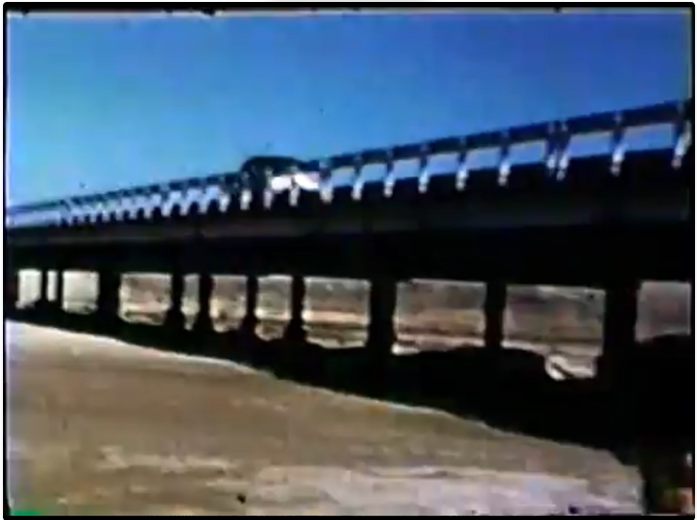
    Highway 256 bridge over the Prairie Dog Town branch of the Red River
    Highway 256 bridge over the Prairie Dog Town branch of the Red River


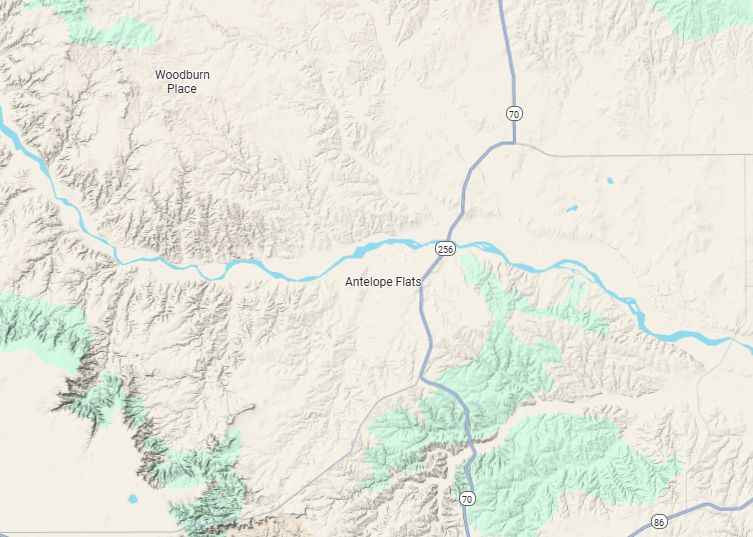
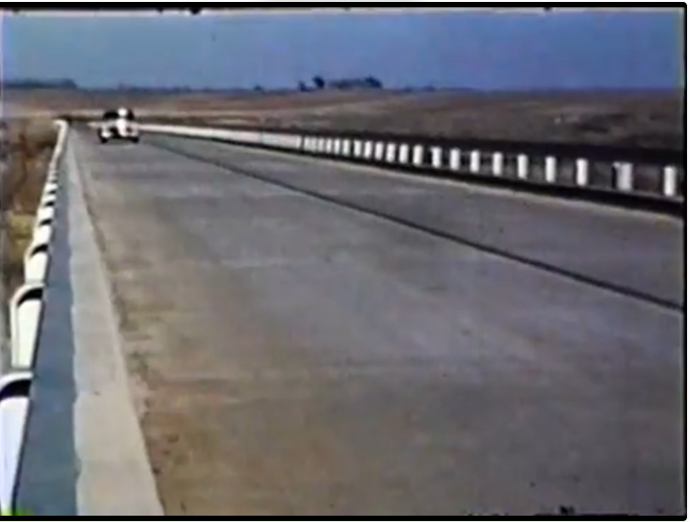
    TX-256 is a state-maintained connector, upgraded mid-century. It crosses the Prairie Dog Town Fork of the Red River. Its bridges were rebuilt to modern standards earlier than many county roads. The guardrail style and spacing match known TX highway bridges of that era. These pictures almost certainly shows the replacement bridge, not the earlier one tied to Antelope Flat.

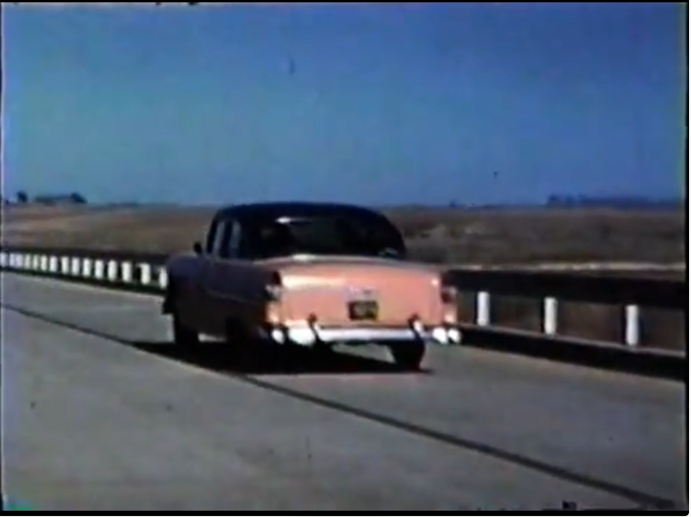
    Auto on Highway 256 bridge over the Prairie Dog Town branch of the Red River
    Auto on Highway 256 bridge over the Prairie Dog Town branch of the Red River

    It has a concrete deck, concrete curb with short, evenly spaced vertical posts (not a truss, not timber), it is two-lane width, and has an engineered guardrail rhythm, uniform spacing. This is not a temporary, county-built, or early ranch bridge. This is a state-standard highway bridge, very likely post-WWII (late 1940s–1950s).

    This bridge appears to be engineered; the roadway is slightly crowned, there is a gentle curve immediately after the bridge, and the approach is not aligned to a strict section line. Older bridges ran straight, followed property lines, and were cheaper to replace than to realign. This bridge follows floodplain engineering, prioritizes speed and flow, and anticipates increasing traffic That is typical of mid-century highway design.

    Auto on Highway 256 bridge over the Prairie Dog Town branch of the Red River
    Auto on Highway 256 bridge over the Prairie Dog Town branch of the Red River

    The vehicles on the bridge provide a dating clue. There is a mid-1950s sedan (rounded rear, chrome bumper) and a two-tone car approaching from the opposite direction. That places the picture comfortably in the mid-to-late 1950s, possibly brushing early 1960s


    Next dirt roads to travel:

    Older crossings often sat on county roads, section lines, and routes that made sense for who lived there, not who passed through.
    The Antelope Flat Bridge

    When the bridge failed, it didn’t end visiting. It revised it. Cars came as far as they could. “We’re coming over. Meet us at the bridge.”
    Meeting at the Broken Bridge

    Gas pumps with hand pumps and glass measuring gauges, known as Visible Gas Pumps, worked by manually pumping fuel into a large, calibrated glass globe atop the pump.
    Antelope Flat commerce

  • Daily Life

    Daily Life In and Around the Farm

    This website and links document a threshold generation. It was still communal, still embodied, and still land-literate, but already mechanized, electrified, and connected to regional systems. It’s the last moment where everything fits inside one family’s understanding. Although this section us called daily life, the tasks would change with the seasons.

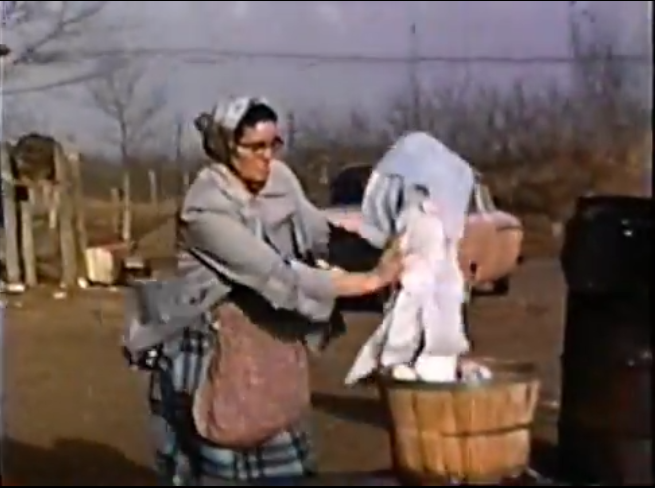
    Grandma doing laundry
    Grandma doing laundry

    Among other things of the time, irrigation changed everything. There was more yield, yes, but also more cost, more labor, and more constraint (no vacations, pipes twice a day). In some cases, no net gain, just a different kind of work

    And the kicker — the land that already had sub-irrigation is where the irrigation was installed, while higher ground that needed it more never got it. That’s not hindsight judgment; that’s lived complexity in the face of the then unknown. Electricity changed time, irrigation changed obligation, and both created dependence as much as abundance.


    Next dirt roads to travel:

    The plants and animals around Brice are a very specific ecological mix — where short-grass prairie, sandy draws, and disturbed farmland overlap.
    The Animals of Brice

    The plants and animals around Brice are a very specific ecological mix — where short-grass prairie, sandy draws, and disturbed farmland overlap.
    The Plants of Brice

    This is an exploration of the history of Brice, Lakeview, Clarendon, and Lakeview in the years between 1935-1960.
    Life in Brice and the Importance of Interdependence

  • Grandma Hanging Clothes

    Grandma hanging laundry

    Grandma Hanging Clothes

    Grandma hanging laundry
    Grandma hanging laundry

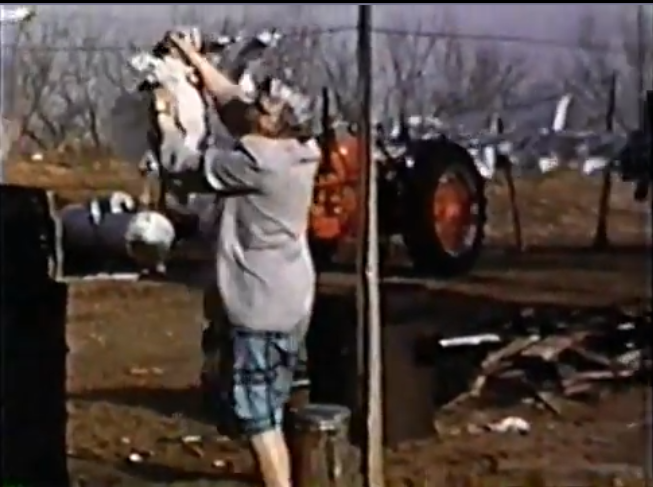
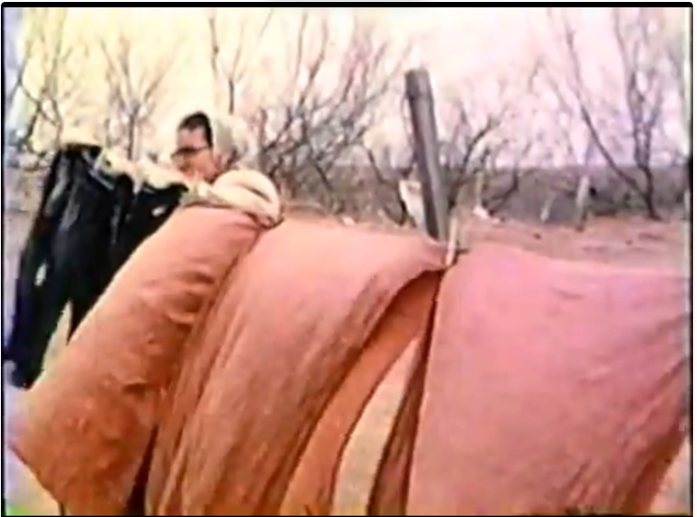
    This is a time when electricity exists, but not in abundance. Clothes dryers are unnecessary or uneconomical. The sun and wind are still collaborators. This is not deprivation—it’s calibration to changing ways of life. It is a snapshot that is changing from the small Antelope Flat to a rented farm.

    Using a clothesline involved hanging laundry on a rope or wire to air-dry. At this time, it was not a choice; it was the only way. Learned techniques included shaking items out, hanging shirts upside down to avoid marks, and positioning items for airflow.

    Two aluminum wash tubs
    Two aluminum wash tubs

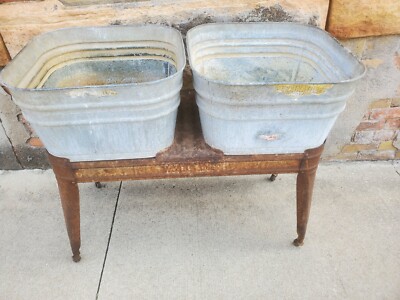
    The aluminum tub is an archetype. It may have been used for both laundry and bathing. This wasn’t poverty—it was water discipline. Water hauled by bucket or barrel, heated on a wood or gas stove, .mixed by feel, not measurement.
    Laundry followed the logic of one wash tub, one rinse tub, sometimes a bluing agent, and clothesline drying (counting on the sun as disinfectant). In the case of bathing, order mattered: youngest/cleanest first, adults last. Cleanliness was not individual—it was managed at the household scale, like farming itself.


    Next dirt roads to travel:

    Water arrived by effort. It did not come to the house; it was invited, persuaded, lifted. Essential. Life-giving.
    Water, With Hands

    This shows the windmill being drilled on the home place. Before this, water had to be hauled, and heated by fire.
    Windmill Drilling

    Daily Life – Maybe these activities didn’t happen every day, but they were typical tasks. Some varied by the time of year, and some were truly everyday occurrences.
    Channel 3 – Daily Life