Category: Farming

  • Hoeing Cotton

    Far away tractor in the field

    Hoeing Cotton

    The Work Without Pictures

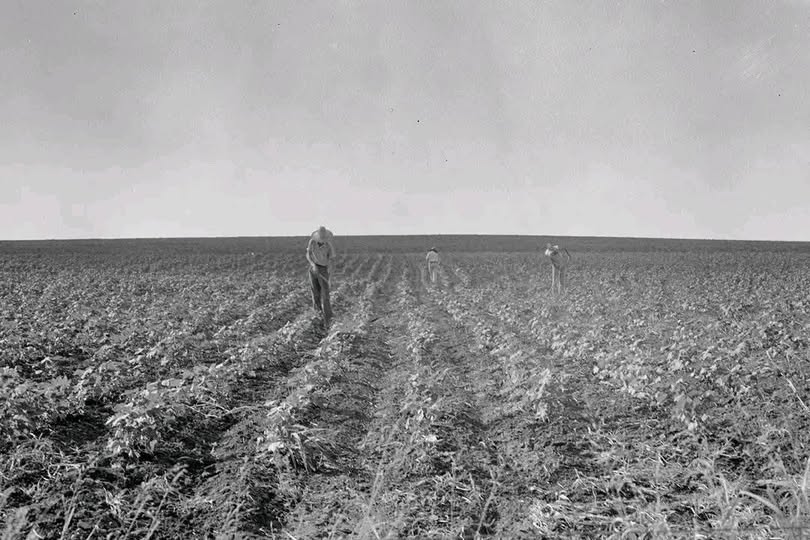
    A regular farm activity the entire family would participate in was hoeing cotton. This was usually done in the heat of summer and the middle of the growing season.

    Hoeing in a field
    Hoeing in a field

    Hoeing was a manual, labor-intensive task used to control weeds and thin the cotton plants. This task was widespread, and was performed during the hot summer months. This was before plastic, so water was carried to the field in glass gallon bottles wrapped in burlap sacks. They also used cloth water sacks; evaporative cooling/sweating in the heat kept the water drinkable. By midday, the water would be warm — but it was life.

    Some memories of work live only in the body. It feels heat pressing down, rows stretching forward, glass bottles of water warming by noon, and the rhythm of step, swing, clear, move. Everyone helped. Not because it was romantic — because that’s when the crop decided what it would become.

    Key aspects

    This was manual labor at a most basic level. Workers used long-handled hoes to chop weeds around the delicate cotton plants, a physically demanding process often referred to as “chopping cotton”. This was usually a family and community effort: This work frequently involved entire families, including women and children, working long hours in the fields. While some plowing and planting provided some mechanization for farming, the precise task of weeding around individual plants often still required human hands. If there were not too many weeds, some people would chop more than one row per pass through the field.

    This era marked a transitional period as technological advancements began to transform agricultural practices, moving away from reliance on extensive manual field labor.


    Next dirt roads to travel:

    Morning and evening moves of irrigation sprinklers dictated time discipline. This is where farming stopped being seasonal and became continuous responsibility.
    Moving Pipe

    “Harvest time.” Two words. No elaboration needed. That implied that everyone in the room understood the stakes. Because the harvest was urgent.
    Pulling Cotton

    YouTube videos of irrigation.
    Channel 2 – Irrigation

  • Crop Spraying

    Crop Spraying

    Crop dusting: scale, risk, and trust

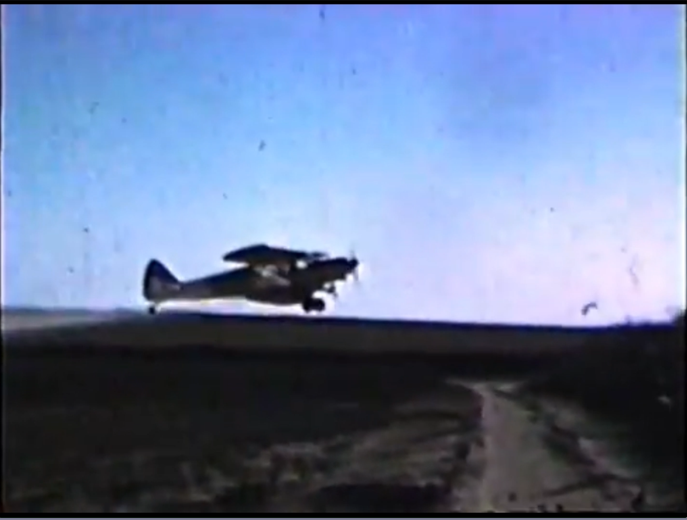
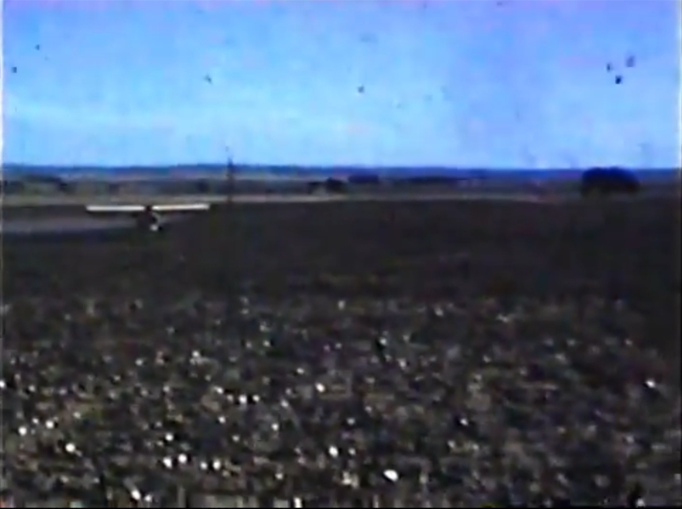
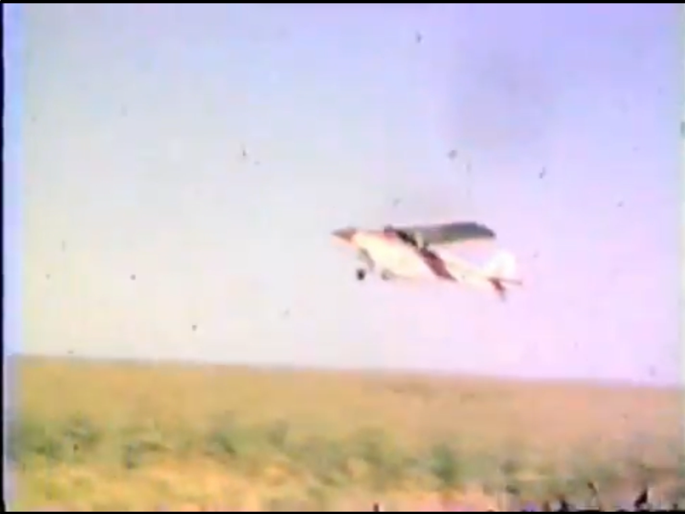
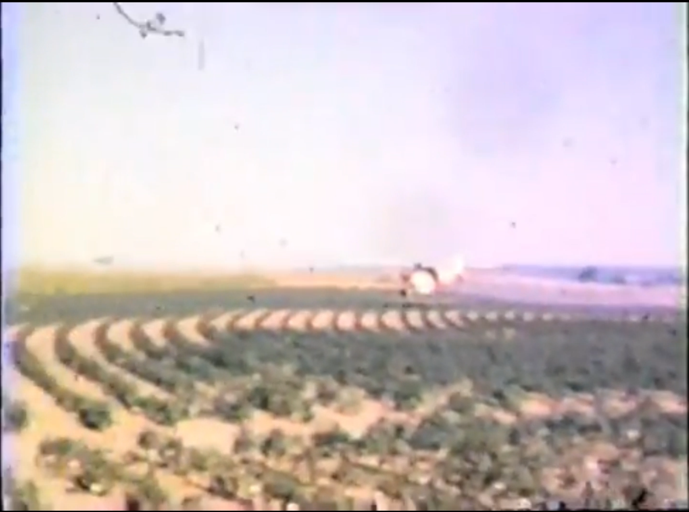
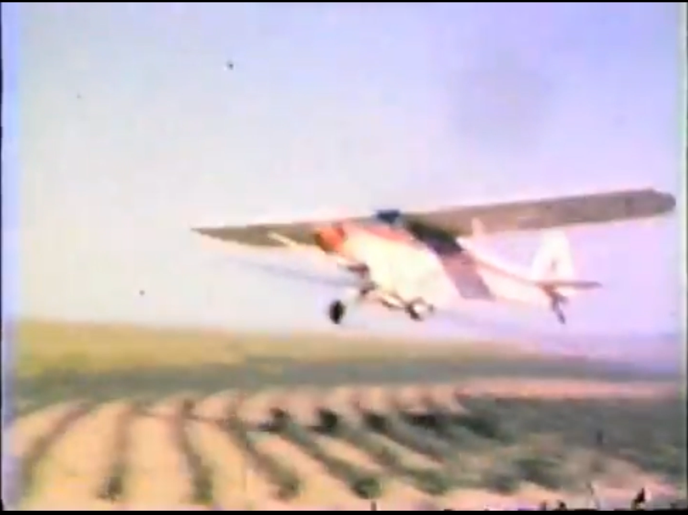
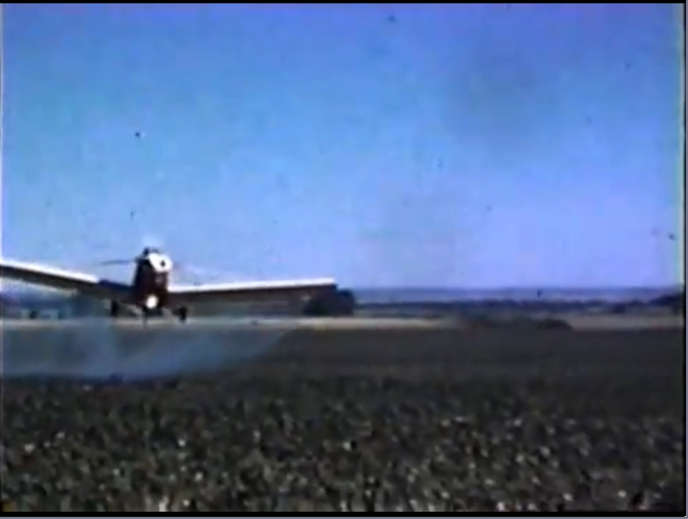
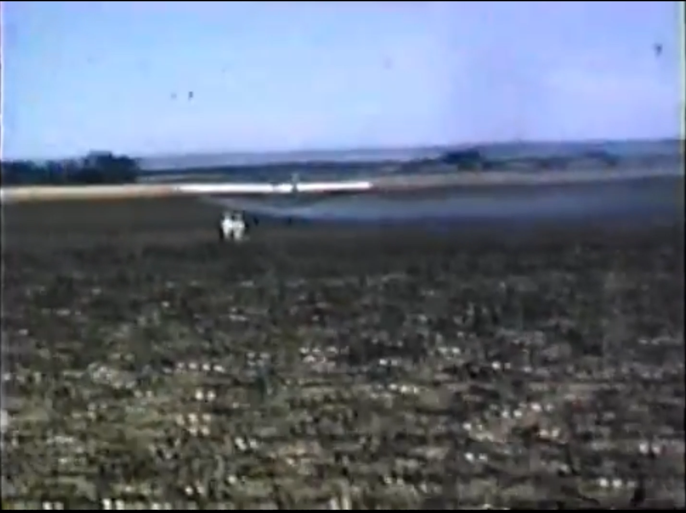
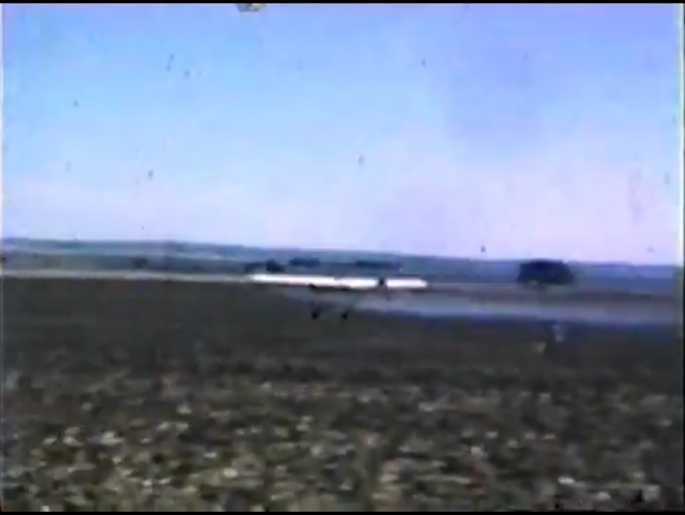
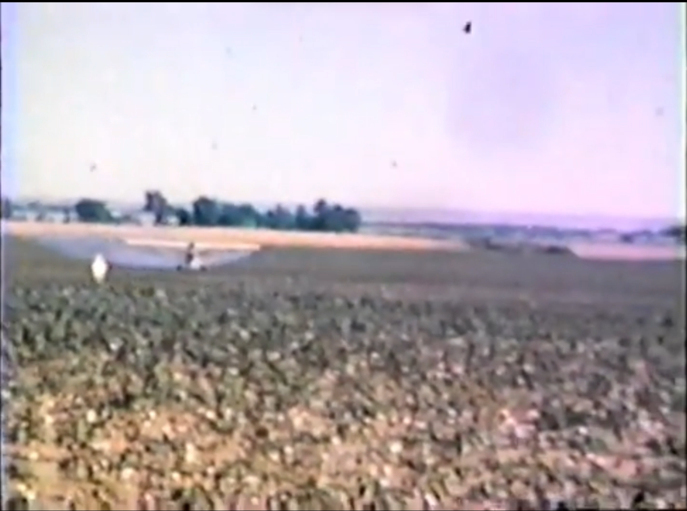
    These pictures show a single-engine, fixed-wing aircraft, likely a Piper Cub–derived ag plane or early Ag-Cat predecessor. It is flying extraordinarily low, wheels nearly brushing the crop canopy. It makes long, straight passes aligned with row geometry. A visible spray plume is dispersed behind the aircraft. There is no protective gear, no warning flags, no perimeter; this is not spectacle. It is routine.

    Crop spraying airplane
    Crop spraying airplane

    A leap in scale, not just technology

    Irrigation expanded seasonal reliability. Crop dusting expanded reach. Water was still moved by hand, pipes were still heavy, and sand still clogged wells. Aerial spraying meant fields were large enough to justify it. It introduces chemicals entering the system on a large scale. The distance between farmer and field is increasing. This was one of the first signs that agriculture was becoming remotely managed. Mechanization doesn’t dominate yet—but it’s here.Now treatment of hundreds of acres could happen in minutes.

    Risk redistributed — not eliminated

    There was no margin for error. For the pilot: one mistake means death. For the crop: one missed pass means loss. For the people below: trust replaces control. This wasn’t ignorance. It was calculated acceptance. Everyone involved understood the pilot’s skill, the machine’s limits, and the cost of doing nothing.

    Crop spraying airplane
    Crop spraying airplane


    Continuity, not rupture

    It’s tempting to read this as modernity arriving. But look carefully and you will see the plane follows the same rows cut by ground equipment. The field geometry still reflects hand-set decisions. The community is still present — just off to the side. This isn’t a break from the world this shows; it’s an overlay. Just like electricity didn’t erase night — it layered over it.

    What the flagger actually represents

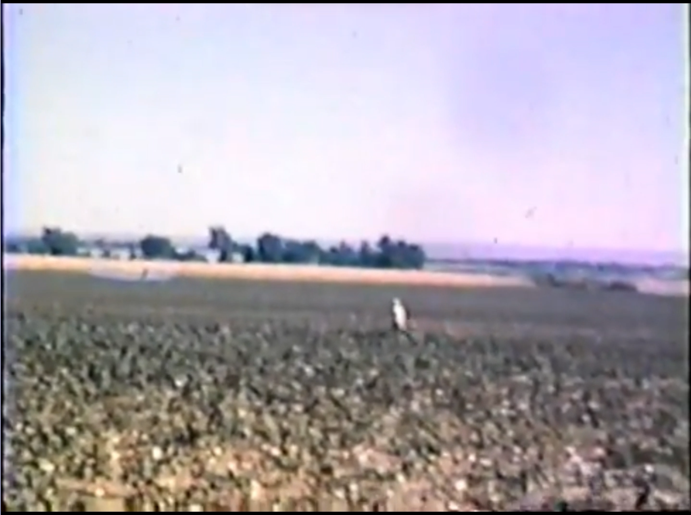
    The pilot was flying at the edge of human capacity: low altitude, heavy load, narrow margin. The field was large, uniform, and visually deceptive from the air. The flagger provided a fixed point — a living reference marker that cut through glare, dust, wind, and motion. This is not crude. It’s elegant. The system is airplane (speed, coverage), pilot (skill, judgment), and flagger (alignment, rhythm, spacing). Remove any one, and the system fails.
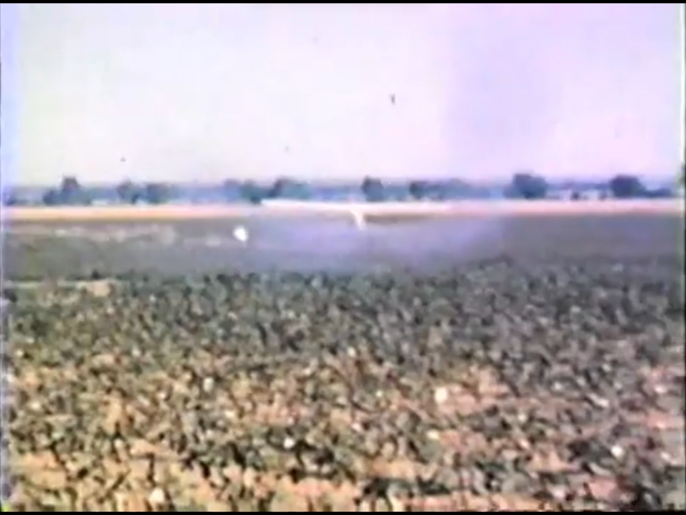
    In the videos, you can see the flagger move over, probably a set number of rows. That detail tells us the spacing was intentional, not improvised, the rows themselves were a measuring instrument, and that the work proceeded in discrete, human-scaled increments. Even at its most mechanized moment, the operation is still paced by footsteps, row counts, visual agreement. This is not automation.as much as coordination.

    Crop spraying airplane, flagger in the field
    Crop spraying airplane, flagger in the field

    The flagger is doing what shows up again and again in this archive; like the person at the end of the irrigation pipe, like the neighbor who shows up to plant, Like the child following the cotton picker, and like the windmill marking the difference between hauling and drawing, the flagger is a living anchor — a fixed point in motion.


    Why this matters historically

    This introduction of airplanes distinguishes mid-century agriculture from both earlier hand labor and later GPS-guided abstraction. Here, trust is local, feedback is visual, correction is immediate, and responsibility is shared. The pilot trusts the flagger, the flagger trusts the pilot, and both trust the rows. That triangle was fragile — and incredibly effective.


    Next dirt roads to travel:

    YouTube videos of unusual occurrences in the Panhandle
    Channel 1 – The Unusual

    The land did not ask to be conquered. Rows were drawn not as lines of dominance but as agreements with wind and water, with what would grow if given half a chance.
    Rows and Rooms

    In the Panhandle before widespread irrigation, farming was event-driven, not clock-driven. Rain determined not just yields, but moods, debts, and futures.
    The Arrival of Irrigation

  • Pulling Cotton

    Pulling Cotton

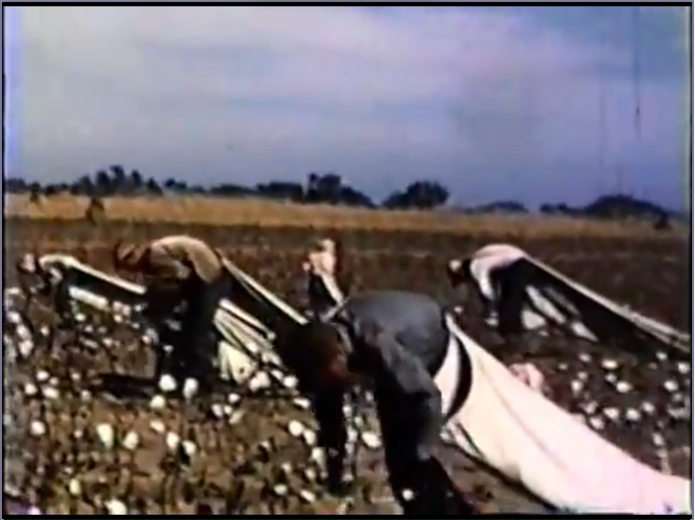
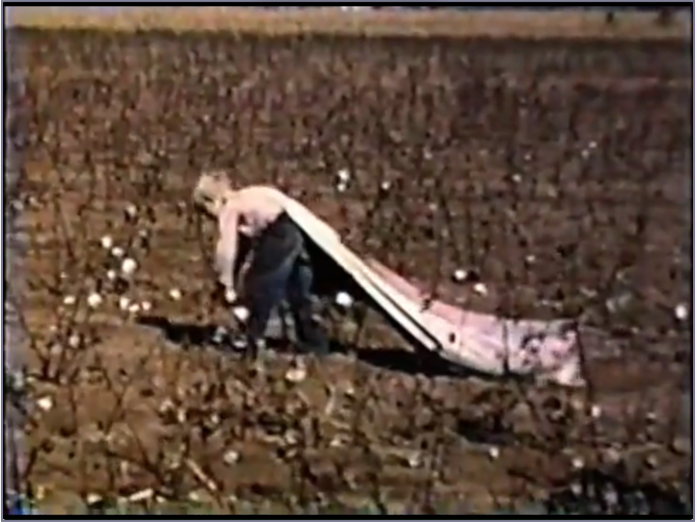
    These scenes show cotton being harvested by hand, before the family had a mechanical cotton stripper. Harvest often happened in two or three passes through the same field, weeks apart: the first pass took the fully opened bolls and best-grade cotton, the second pass gathered what had opened since, and the final pass took the late bolls that might never fully open but still held usable cotton. Pulling was organized labor: workers estimated how much row would fill a sack and often started at the far end of the field so they wouldn’t have to drag a heavy, full sack farther than necessary.

    Weighing the Cotton

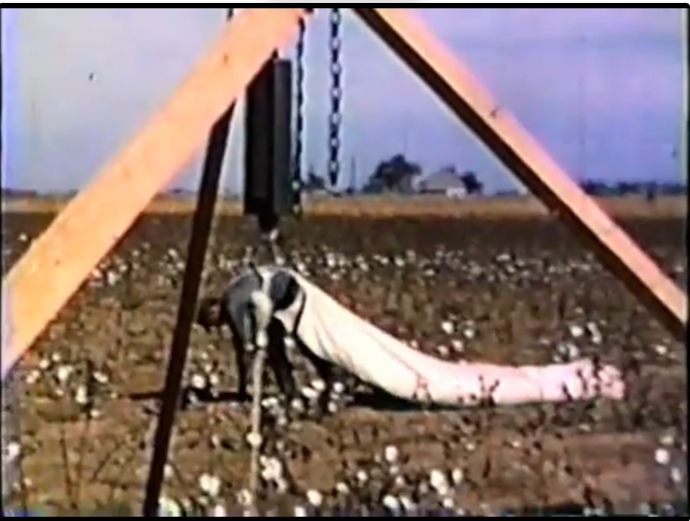
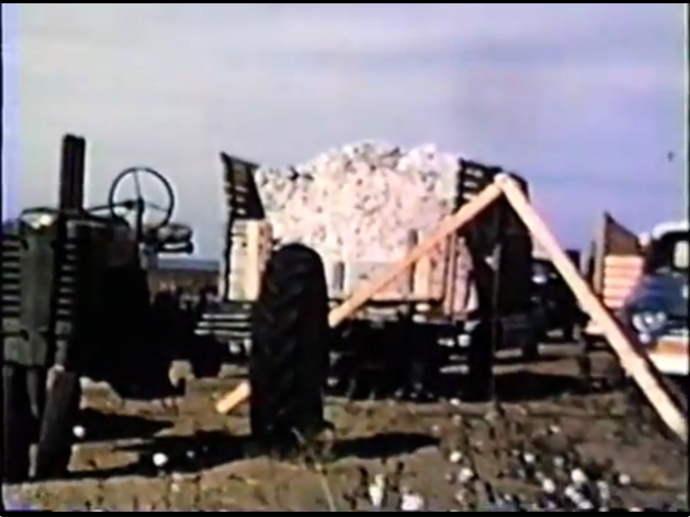
    The wooden tripod in the image is not incidental. It supported the scale. Each sack was hoisted, weighed and emptied into the trailer. Weight meant pay, pride, and proof of the day’s work. The field had a quiet economy built into it: not vague “help,” but measured contribution.

    Scale for weighing cotton sacks
    The scale that was used to weigh each bag before it was emptied into the trailer

    These pictures capture an in-between technology stage. In this time, children’s labor was normalized. Nothing was abstracted yet—every boll counted. Later systems will optimize for speed and acreage. This one still optimized for total yield per field. The cotton stripper represented mechanization, missed cotton and imperfection. This led to later hand-gathering to gather anything missed. This tells us that efficiency mattered, but completeness still mattered more.

    Mechanized harvest and human recovery

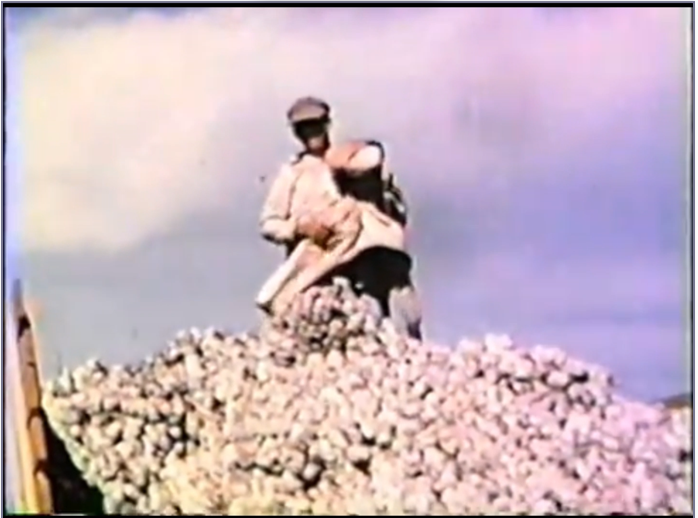
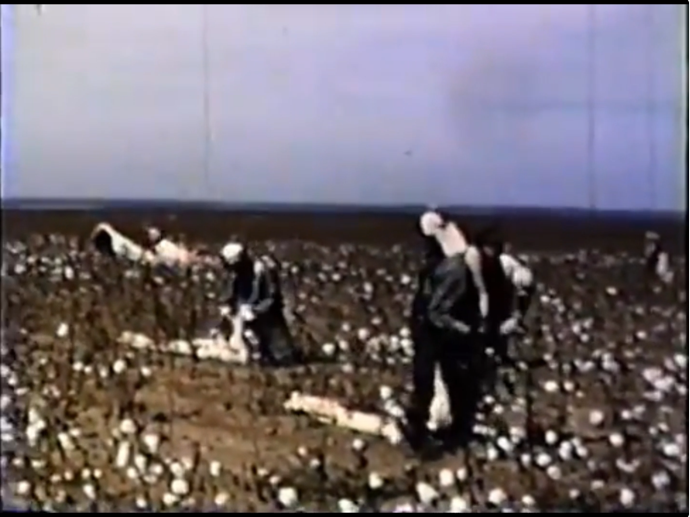
    This picture shows a trailer filled by a human labor. People worked on foot with long canvas sacks, bending, stooping, dragging weight across uneven ground to accomplish this. This was not inefficiency — it was the system as it existed. The machine later maximized speed and volume. These people maximized completeness and value. Together, they formed the evolution of the harvest process over time.

    Water in the Field

    This was before plastic arrived on the scene. Water was carried to the field in glass gallon bottles wrapped in burlap sacks. Cloth water sacks were also used ; evaporative cooling/sweating in the heat kept the water drinkable. By midday, the water would be warm — but it was life.

    Pulling cotton in a field near Brice Texas in the Panhandle
    Pulling cotton in a field near Brice Texas in the Panhandle

    The sacks themselves matter

    Sacks came in different sizes to match strength and age. Those long canvas sacks distributed weight along the back. It caused a pull against the shoulders and spine, and required a particular gait and rhythm. These were not casual tools. They shaped the body over time.

    The Three Passes

    Cotton was not harvested all at once. The field was walked two or three times, weeks apart: The first pass was the money pass. It gathered fully opened, fluffy bolls of clean, high-grade cotton. It was easiest to pull, and had the least trash. This was the most valuable cotton. The second pass — the work pass gathered newly opened bolls that had matured since the first pass. This was still good cotton, but more uneven. It required more stooping, and more judgment. The final pass — the salvage pass — gathered bolls that never fully opened. It had shorter fibers, and lower quality. It was pulled because nothing was wasted. The final pass was hardest on the hands and the slowest work.

    Scale and openness

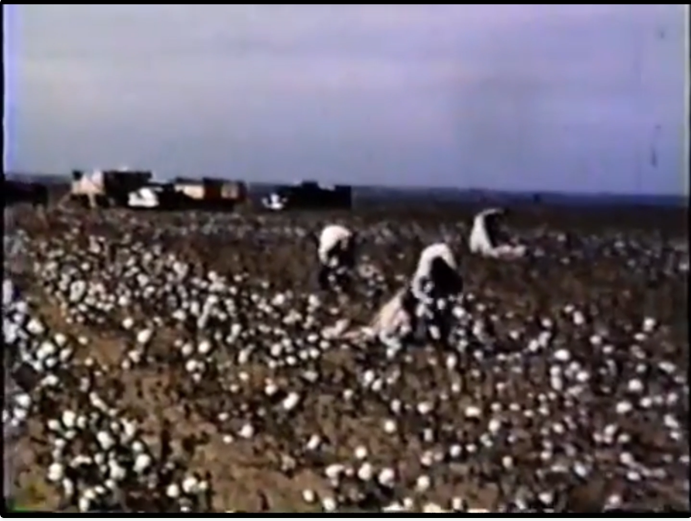
    “Harvest time.” Two words. No elaboration needed. That implied that everyone in the room understood the stakes. Because the harvest was urgent, school schedules could pause so younger family members could work in the field. Harvest is a season, not an event and effort is assumed, not explained. The wide shots show a flat horizon, no shelter, no shade, and no interruption. This was labor done fully exposed to wind, sun, cold, and repetition.

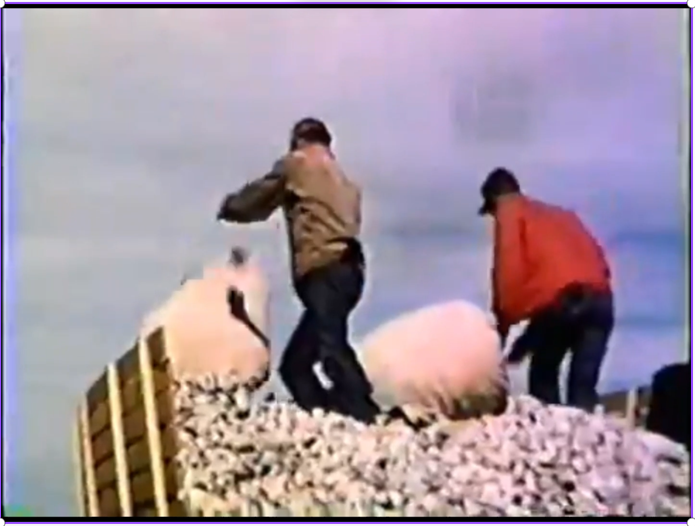
    Emptying cotton sack into the trailer
    Emptying cotton sack into the trailer

    Family labor is still assumed.

    The people harvesting are not hired crews. They are family, neighbors, children and elders. This is the work that disappears first when irrigation stabilizes yields, harvesters improve and labor becomes externalized. It captures the somatic cost before it vanished. This is the moment where endurance is still personal, but the future is already mechanical.

    The background equipment in this picture quietly expands the story from “harvest labor” into how a whole farm system operated at once. Behind the hand pickers and the filled trailer, we see tractors parked or idling, trailers positioned for loading, and trucks waiting their turn. This is orchestration, not improvisation. Even though hand labor is still essential, the day is planned around machine flow. Harvest is no longer “field-by-field”; it’s system-wide, with equipment, people, and timing interlocked.
    Mechanization did not eliminate labor — it rearranged it

    These pictures show an in-between era. The machines remove the bulk, and humans recover the remainder, Full mechanized harvesting is not yet complete. Neither is hand labor gone. This is the hybrid phase.

    Just like in other pictures, this shows newer machinery alongside older tractors, mismatched trailers, and equipment that came from different owners. That reinforces two things. This is not a single-owner, uniform setup It is a harvest that draws on whatever works, not whatever matches. It shows that efficiency comes from coordination, not standardization. It shows that trucks mattered as much as tractors
    The presence of road trucks in the background is easy to miss, but it’s crucial. It tells us cotton is moving off the farm, not just to a nearby gin later. Roads, bridges, and timing matter immediately. This harvest is tied into the regional economy (Clarendon / Memphis / beyond).

    Pulling cotton in a field near Brice Texas in the Panhandle
    Pulling cotton in a field near Brice Texas in the Panhandle

    Why this matters emotionally, not just technically

    The foreground shows bent backs, dragging sacks. The background shows machines waiting patiently. That visual contrast says something profound: machines reduce labor, but they don’t yet replace it. The human body is still the final quality-control mechanism. This shows a time when people, animals, machines, and roads all mattered at once. Nothing was yet disposable and nothing was yet fully optimized. Soon, harvesters improve, irrigation stabilizes yields, labor externalizes, equipment standardizes, and bodies disappear from the picture. But right here, they’re all still present — foreground and background together.


    Next dirt roads to travel:

    Daily Life – Maybe these activities didn’t happen every day, but they were typical tasks. Some varied by the time of year, and some were truly everyday occurrences.
    Channel 3 – Daily Life

    There are places that never learned how to stay on a map. They lived instead in directions. Named by distance, memory, and need. 23 miles northeast of Silverton.
    23 Miles NE of Silverton

    A regular farm activity the entire family would participate in was hoeing cotton. This was done in the heat of summer and the middle of the growing season.
    Hoeing Cotton

  • Rows and Rooms

    Rows and Rooms

    The land did not ask to be conquered.
    It asked to be understood.

    Rows were drawn not as lines of dominance
    but as agreements —
    with wind and water,
    with slope and sun,
    with what would grow if given half a chance.

    Hands learned before mouths did.
    Feet learned before maps existed.
    A man knew the field by how it pulled back on him,
    by how dust lifted,
    by how irrigation hissed like a held breath released.

    At the smallest scale, this was a household:
    people sharing work, food, memory.
    Someone watched the end of the pipe.
    Someone remembered to flush the sand.
    Someone stood where they could be seen.

    The pattern repeats.

    Brice was not a town meant to be complete.
    It was a home.
    A place where life happened daily —
    unrecorded, uncelebrated, essential.

    Clarendon became the room where life was made official:
    records kept, brands registered,
    children educated, vows witnessed,
    names entered into ledgers so memory could endure.

    Lakeview became the hallway —
    movement, processing, transition —
    where cotton left the field,
    grain found elevators,
    and work learned to travel.

    Memphis was the door —
    opened only when needed —
    connecting the circuit outward
    to rail, to market, to a larger world.

    None of these places were sufficient alone.
    Together, they formed a system.
    Not a hierarchy, but a circuit.

    Back in the field, the pattern tightened again.

    Windmills rose —
    slow prayers turned into motion,
    water lifting because someone believed it could.

    Later came pipes and sprinklers,
    metal bones laid carefully across soil,
    moved by family, not machines alone.

    Water arrived reliably —
    but obligation arrived with it.

    Morning and evening, the pipes had to move.
    Sand had to be flushed.
    Time itself became something you tended.

    The pattern repeats.

    Progress did not erase labor;
    it rearranged it.
    It did not remove responsibility;
    it redistributed it.

    Then wings arrived.

    An airplane skimmed the earth like a thought finally spoken,
    spray trailing behind it,
    rows passing beneath in perfect geometry.

    At the far end of the field,
    a person stood.

    Not as an afterthought.
    Not as a risk.
    But as a fixed point —
    a living anchor —
    so the pilot could aim true.

    When the plane turned, the person moved —
    a set number of rows,
    measured not by instruments,
    but by steps and trust.

    Even here, at speed,
    even with the sky enlisted,
    the system required someone to be visible.

    The pattern repeats.

    At the smallest scale:
    a family that shows up.

    At the next:
    neighbors who plant for the sick,
    who bring old equipment alongside new,
    who understand that one day
    they will need the same grace returned.

    At the next:
    towns that do not compete,
    but specialize —
    one holding quiet,
    one holding record,
    one holding movement.

    Zoom out further.

    Amarillo becomes a Clarendon for the Panhandle.
    Texas becomes a Lakeview for the nation —
    production, exchange, passage.
    The United States becomes a Brice for the world —
    vast, unfinished, rich in possibility,
    still learning how to live inside its abundance.

    Same structure.
    Different scale.

    This is the fractal truth:
    what fails at the small level
    cannot be repaired at the large one.

    If a household forgets care,
    a nation cannot invent it later.
    If a town forgets responsibility,
    a state cannot legislate it back into being.

    But if integrity exists in the smallest unit —
    a class of thirteen that still gathers,
    a man who knows which end of the pipe to watch,
    a person willing to stand at the end of the rows —

    then that integrity echoes upward,

    self-similar,
    scale by scale.

    The Dream for the World will not arrive fully formed.
    It will not descend.

    It will repeat.

    It will look like land treated as relationship,
    progress paired with attention,
    systems that remember their limits,
    and growth that keeps a human visible inside it.

    The future will not be saved by becoming larger.
    It will be saved by becoming truer
    in rows and rooms,
    in fields and towns,
    in households and nations.

    Just like the Panhandle always knew.


    Next dirt roads to travel:

    Lyrical essays are an intentional contrast to analytical essays. Lyrical essays border on poetry. However, the intention is the same; to inform and to encourage thought.
    Lyrical Essay

    Before we knew the names of things, we knew how they felt. We called them stickers— goatheads, sand burrs, anything sharp enough to stop a barefoot child mid-stride.
    Stickers and Horny Toads

    A town is not a point. It is a pattern. Brice was a household. Clarendon was a room. Lakeview was a hallway. Memphis was a door. None sufficient alone. All necessary together.
    The Fractal Town
  • Grandpa’s Tractor and the Old Home Place

    Grandpa’s Tractor and the Old Home Place

    Grandpa’s Tractor

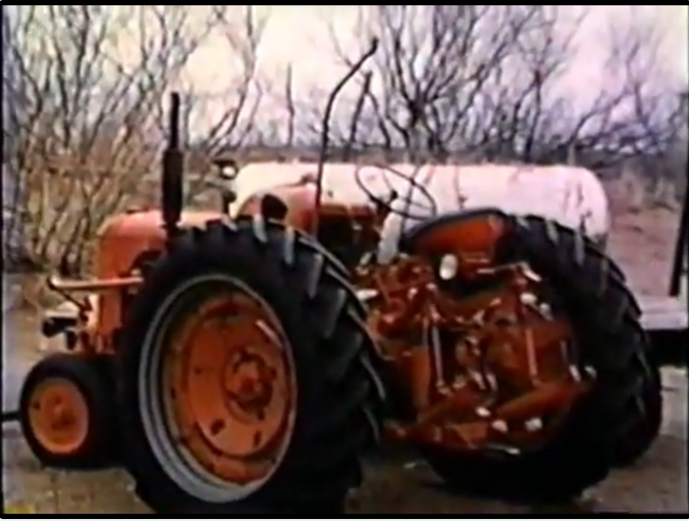
    Old tractor and fuel tank
    Old tractor and fuel tank

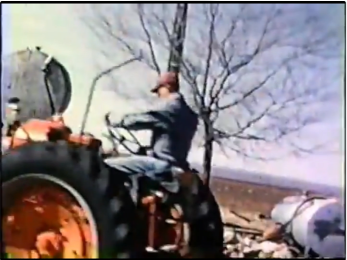
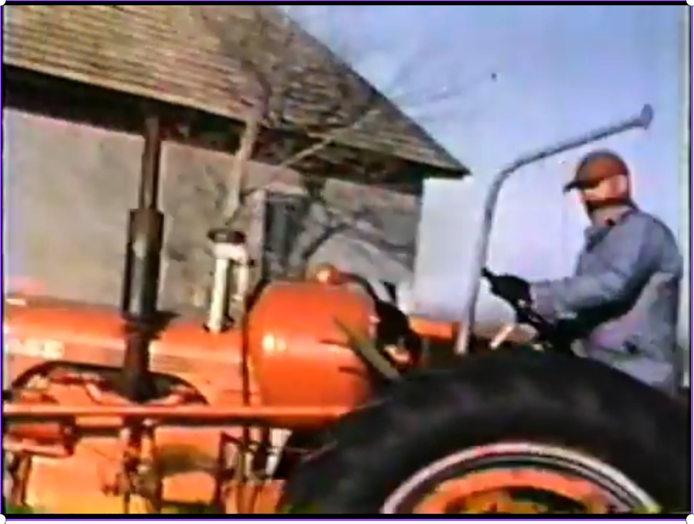
    This frame shows an orange/red row-crop tractor with narrow front (tricycle-style). It has high rear wheels, a low-slung engine, and upright exhaust. The design is strongly consistent with Farmall tractors (H or M series), widely used from the late 1930s through the 1950s. The operator was seated upright, hands on wheel, posture relaxed but practiced. This is not a novelty tractor. It’s a primary workhorse, already familiar to its operator.

    This image is significant because it shows two distinct fuel tanks. This is easy to miss, but profound. The cylindrical horizontal tank on a stand is metal and has rounded ends. It is elevated slightly above ground and is plumbed, not portable. This is almost certainly a gasoline or diesel storage tank used for tractors, trucks, and possibly irrigation engines later. Elevation matters, and gravity feed simplifies fueling and reduces pump dependence. The tractor fuel tank ties the farm to weather, seasons, and soil conditions. The butane tank ties the home to comfort, predictability, and extended day/night use (especially post-electrification). Together, they mark the moment when survival became managed, not merely endured.

    Grandpa on his tractor at the old home place
    Grandpa on his tractor at the old home place

    The large rounded tank near the house is consistent with a butane/propane tank. It was typically used for home heating, cooking, possibly water heating. The coexistence of both tanks tells us something crucial; energy was layered, not unified. Electricity existed—but fuel autonomy still mattered.

    The house and immediate surroundings

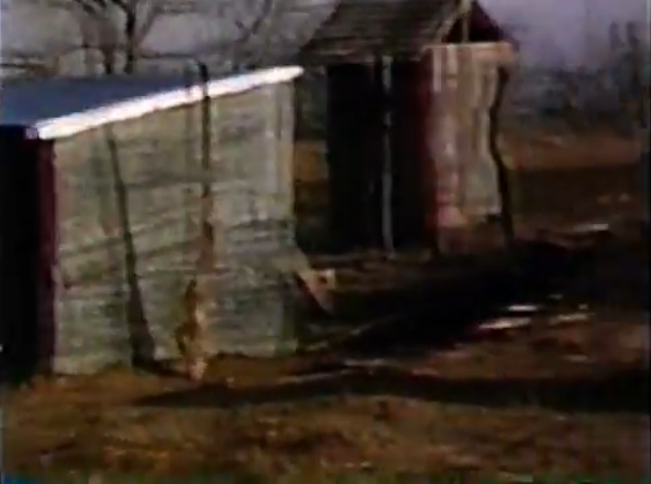
    We also see a wood-frame house with shingled roof and a mature deciduous tree close to the structure (likely planted intentionally for windbreak/shade). There are outbuildings nearby (not decorative—completely functional). There is no pavement or ornamental fencing. This is a working yard, not a domestic display space.
    Everything visible serves shelter, fuel, food, or labor. Nothing here is redundant. This is not pioneer hardship or modern consolidation. This is a balanced system that is mechanized, but human-scaled. It may have been electrified, but it was still fuel-secure and productive, but still intimate.

    Outbuilding and outhouse
    Outbuilding and outhouse

    The tractor, tanks, and house formed a closed loop. It functioned by land to fuel, fuel to machine, machine to labor, labor to home, and home back to land, At this point, the loop was not yet been broken by specialization.

    About Grandpa and the tractor

    Grandpa’s posture, proximity to the house, and comfort with the machine show ownership and probably long-term daily use. He was not a hired hand and this was not a demonstration moment; this is home ground, not a field visit. The tractor is part of the household’s rhythm.

    Grandpa on his tractor at the old home place
    Grandpa on his tractor at the old home place

    These scenes are not dramatic. That’s what makes them powerful. History books show dust storms, crises, and breakthroughs. These scenes show continuity, and continuity is what actually carries families—and regions—forward.


    Next dirt roads to travel:

    The plants and animals around Brice are a very specific ecological mix — here are a few a few details about each plant of the area.
    The Plants Around Brice


    The plants and animals around Brice are a very specific ecological mix — here are a few a few details about each plant of the area.
    The Animals Around Brice

    Deep plowing after cotton harvest served to bury stalks for pest control, especially boll weevil. It also incorporated residue and to reset the soil surface.
    Deep Plowing After Cotton Harvest

  • Deep plowing after cotton

    Deep plowing after cotton


    About Deep Plowing

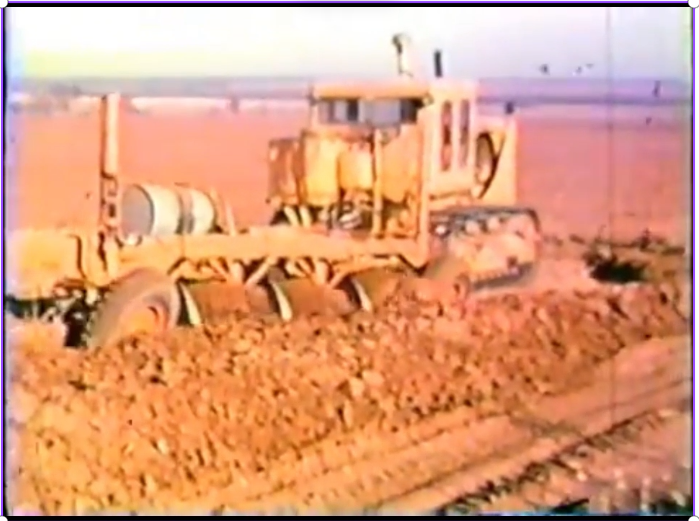
    Deep plowing after cotton harvest served to bury stalks for pest control, especially boll weevil. It also incorporated residue and to reset the soil surface. This was at a time when cotton was still dominant, soil health was understood practically, not abstractly. It also shows that labor and fuel were being spent now to protect next year, an investment in the future. This is stewardship through work, not policy.

    Deep plowing in the Panhandle of Texas
    Deep plowing in the Panhandle of Texas

    Deep Plowing in Action

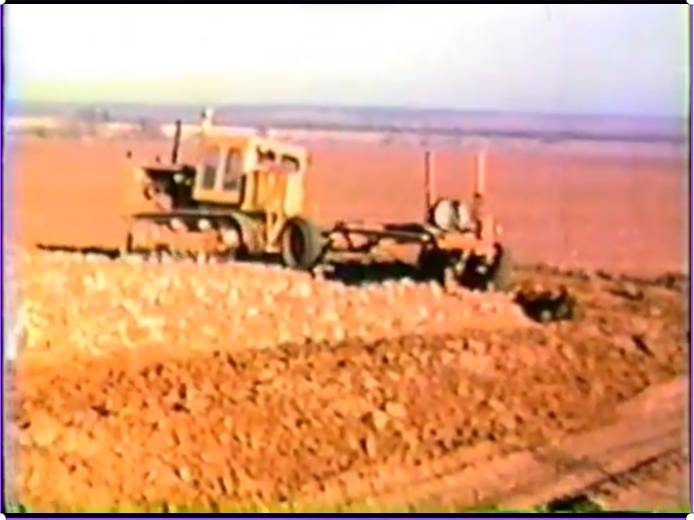
    This frame shows us a yellow crawler tractor (very likely Caterpillar, mid-century) and large disc plow throwing heavy soil, That’s a deep plow! The wheels keep it at a steady level and control the depth of the plow.  Fuel drums were mounted on the implement and the operator was enclosed in a simple cab. This is serious earth-moving agriculture, not garden-variety tillage. Crawler tractors of this size were used when fields were being opened up, land was being reworked, or when soil conditions defeated wheeled tractors. This suggests either conversion of pasture or rough land into cropland or major reconditioning of existing fields. This aligns with the irrigation-era transition, when deeper, more uniform fields became desirable.

    Deep plowing in the Panhandle of Texas
    Deep plowing in the Panhandle of Texas

    In this image, we can see clearly a long, continuous cut. There is significant soil displacement by the plow. The background is vast and flat with no visible fencing nearby. This tells us that agriculture shifting scale and function. Dryland farming tolerated irregularity while irrigated farming punished it.
    Laser leveling comes later — but this is the first step toward geometry: straight lines, uniform depth, predictable flow. This machine is reshaping land not just for crops, but for systems.


    Next dirt road to travel:

    The CCC was very active across the Panhandle from 1933–1942, including Briscoe, Hall, Donley, and Randall counties. Local work included windbreaks and shelterbelts.
    CCC in This Area

    The eastern Texas Panhandle didn’t support isolated self-sufficiency. Distances were long. Population was thin. Each town specialized — not by planning, but by necessity.
    The Area Commerce

    New equipment wasn’t bought sight-unseen; it was demonstrated. Farmers gathered for the demonstration because capital investment was serious and mistakes were costly.
    Farm Equipment Demonstrated

  • Tractor demonstration, farmers gathered

    Tractor demonstration, farmers gathered


    Dealer demonstration

    This is not just about machinery. This is about knowledge transmission. New equipment wasn’t bought sight-unseen; it was demonstrated. Farmers gathered for the demonstration because capital investment was serious and mistakes were costly. With collective evaluation they could reduce risk. This is peer-reviewed agriculture. This is community-centered decision-making.

    Before consolidation, before consultants, before agronomists, farmers learned together, evaluated together, and adopted together. This is why Brice and Lakeview still mattered socially even as Clarendon and Memphis grew institutionally.

    You’re seeing early adopter dynamics and community as a learning network. This is progress happening in public. Manufacturers/dealers brought new models out and the farms functioned as temporary showrooms. Knowledge spread socially, not through brochures. That’s a very specific mid-century agricultural practice. The dealerships were in Memphis where the equipment was shiny and new. It is apparent that dealers were present in the field, relationships mattered and sales were personal and reputational.

    Farmers watching farm equipment demonstration
    Farmers watching farm equipment demonstration

    Community gathered behind the plow

    That row is a little crooked! Grandpa taught that “his crooked rows would hold more”. That is cultural agronomy, not engineering. It tells us that yield was understood experientially and that straightness was not the highest value. Optimization was local knowledge, not standardized practice.

    This shows the transition between dryland and irrigated logic. We see deep tillage, soil standardization, heavy equipment, and increased fuel use. All of this precedes or accompanies irrigation. The land is being asked to become predictable.

    No one here is abstracting. Everyone is close to the ground. Everyone understands what they are seeing. This kind of embodied knowledge fades rapidly once fields enlarge, systems automate, and labor specializes.

    Farmers watching farm equipment demonstration
    Farmers watching farm equipment demonstration

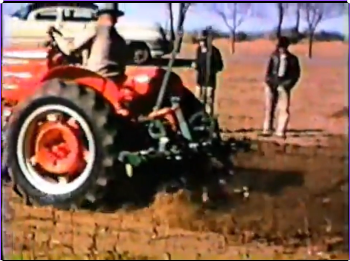
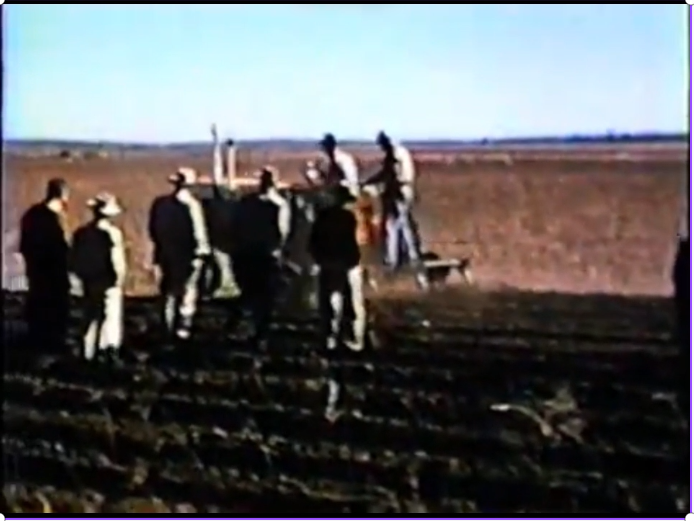
    We can see clearly a red tractor (likely Farmall or Allis-Chalmers era, late 1940s–1950s). It has rear-mounted deep tillage equipment actively engaging soil and observers standing off to the side, watching soil turnover. The soil is dry but workable — not muddy, not powder-dry.

    This tells us that this is likely post-harvest deep plowing, very plausibly after cotton. Deep plowing here serves stalk burial (boll weevil suppression was still a concern), residue incorporation, and moisture management for the next season.

    The tractor color and form place this comfortably in the post-WWII mechanization boom, when surplus manufacturing capacity and pent-up demand flooded rural America with new machines. This is the moment when horsepower becomes a social event, not just a tool.

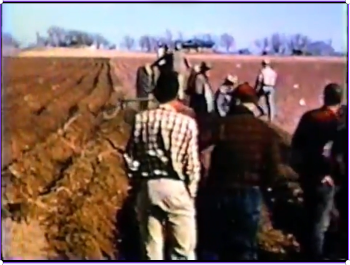
    Here there are multiple adult men, dressed in work clothes and hats typical of the 1940s–50s. We can also see deep, straight furrows already cut, people walking behind or alongside the equipment, not merely watching from a distance. In the background, we can see open, flat High Plains horizon with very little tree cover. This tells us this is not routine field work. This is a demonstration or collective evaluation. You can tell that by the density of people relative to the task, their position in the field (close, attentive, aligned with the furrow), and the absence of casual posture.

    This shows farmers gathering to see new equipment or a new method. In this era, machinery decisions were expensive, irreversible in the short term and discussed socially, not individually. This is community risk-sharing through observation.

    Farmers watching farm equipment demonstration
    Farmers watching farm equipment demonstration

    In this picture we can see clearly men grouped in a semicircle around the working end of the implement. One or two operators are elevated on the tractor or implement. There is dust, but not excessive — indicating controlled depth and speed. This tells us that they are not admiring the tractor, they are watching soil behavior. This is farmer science: how deep does it cut? Does it roll or shatter? How uniform is the furrow? How much draft does it require? No pamphlet answers these questions as well as standing in the field.


    Next dirt roads to travel:

    The eastern Texas Panhandle didn’t support isolated self-sufficiency. Distances were long. Population was thin. Each town specialized — not by planning, but by necessity.
    The Interdependence of Brice, Lakeview, Clarendon, and Memphis

    Opens on another website — https://fractegrity.com/about-interconnectedness/
    About Interconnectedness

    This is one of the most culturally important attributed , all pitching in to help a neighbor. “If one of us falls behind, we all fall behind.”
    Community Planting for a Sick Neighbor