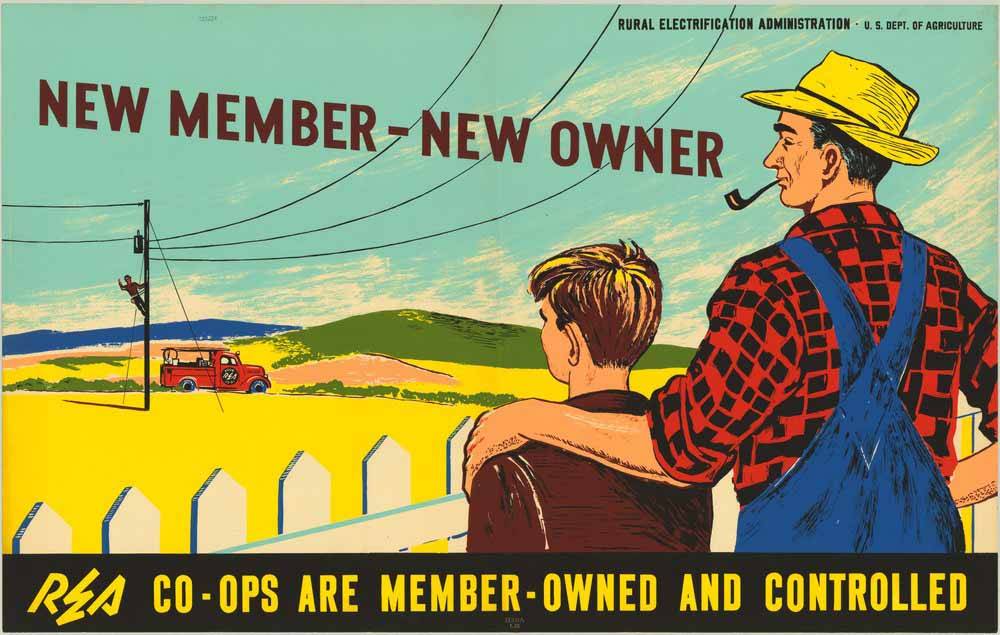
Radio and Electric Light
How Rural America Entered the National Conversation
Electric light made radio possible as a nightly ritual. Radio made the nation audible. Together, they rewired political awareness in rural America — not through ideology first, but through presence. Before Radio, politics was an occasional intrusion. On farms before radio, news arrived by weekly newspapers, word of mouth, or church and town meetings. National politics felt distant and awareness was episodic, not continuous. Politics was something that happened elsewhere.

Radio Changed the Scale of Belonging
Radio brought the same voice into millions of homes at the same time and under the same light. This mattered deeply. For rural listeners Washington stopped being abstract, and leaders became voices. Tone mattered as much as content. Franklin D. Roosevelt’s fireside chats are the canonical example, but the effect was broader. For the first time, rural Americans heard themselves addressed directly, not summarized later. Electric light kept people awake long enough to listen attentively, and radio gave them a reason to do so.
Evening Political Consciousness
Radio listening typically happened after supper with lamps off, lights on. Chairs were drawn inward and children were quieted. This was not passive consumption. Families discussed what they heard. It might include farm policy, war news, labor conditions, and weather forecasts tied to national patterns. Politics moved from courthouse to kitchen, from occasional to continuous, and from abstract to conversational. Opinion formation became a nightly practice, not a seasonal one.
The Psychological Shift: From Local to Regional Identity
Radio did not erase local identity. It stacked identities. A farmer could be loyal to land, rooted in church, aware of global war, and invested in federal policy. This layering required time to absorb. Electric light provided that time. Without light, radio would have been a novelty.
With light, it became a habit.
Subtle Authority Shift
Before radio, authority was local and visible. After radio, authority became vocal and distant — but intimate. This had consequences. There was increased trust in federal institutions (especially during the New Deal), increased expectation of explanation, and a new sense that leaders owed clarity, not just power. Rural political awareness became listening-based, not rumor-based.
Next dirt roads to travel:
Electricity didn’t arrive as convenience. It arrived as astonishment. Electricity didn’t merely add light — it re-tuned time.
Electricity Comes to Brice
Radio and electric light did not politicize rural America in a crude sense. They did something quieter; they trained people to listen together.
Electricity and the Inner Life
This is a time when electricity exists, but not in abundance. Clothes dryers are unnecessary or uneconomical. The sun and wind are still collaborators.
Grandma Hanging Clothes