Pulling Cotton
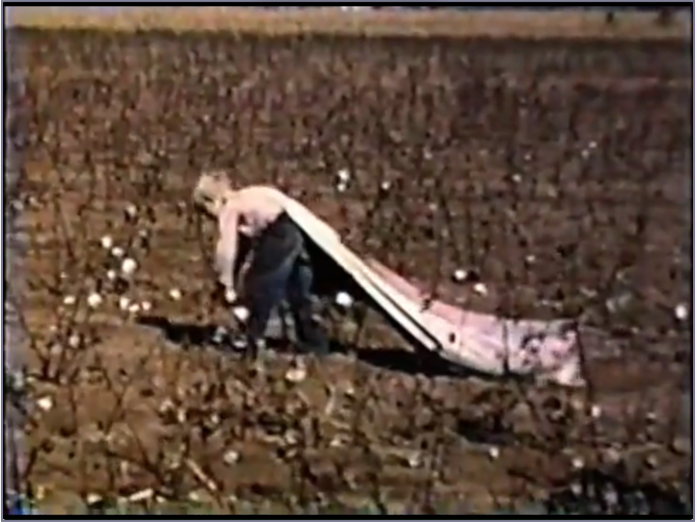
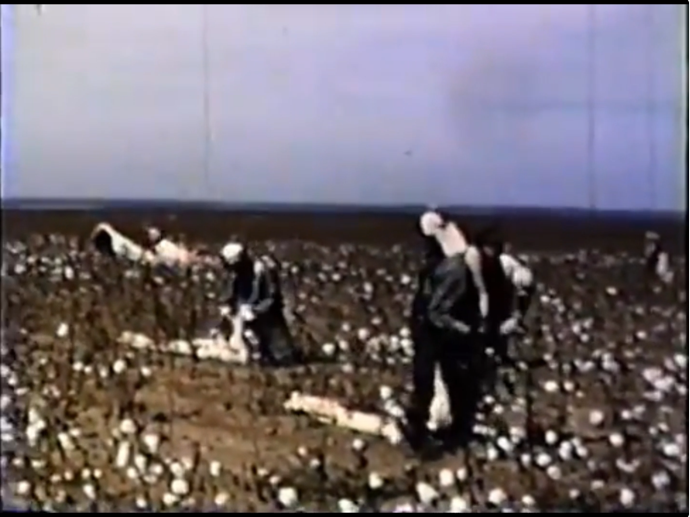
These scenes show cotton being harvested by hand, before the family had a mechanical cotton stripper. Harvest often happened in two or three passes through the same field, weeks apart: the first pass took the fully opened bolls and best-grade cotton, the second pass gathered what had opened since, and the final pass took the late bolls that might never fully open but still held usable cotton. Pulling was organized labor: workers estimated how much row would fill a sack and often started at the far end of the field so they wouldn’t have to drag a heavy, full sack farther than necessary.
Weighing the Cotton
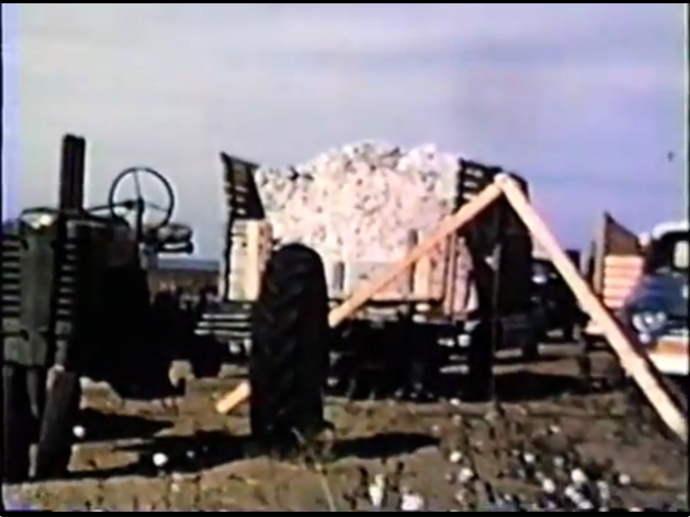
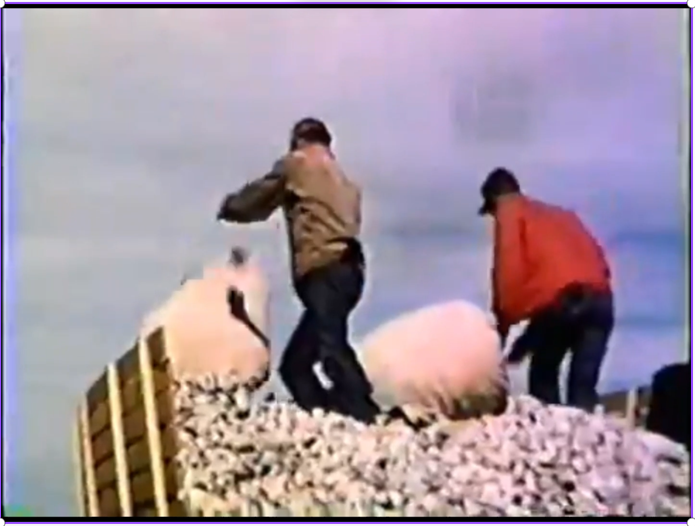
The wooden tripod in the image is not incidental. It supported the scale. Each sack was hoisted, weighed and emptied into the trailer. Weight meant pay, pride, and proof of the day’s work. The field had a quiet economy built into it: not vague “help,” but measured contribution.
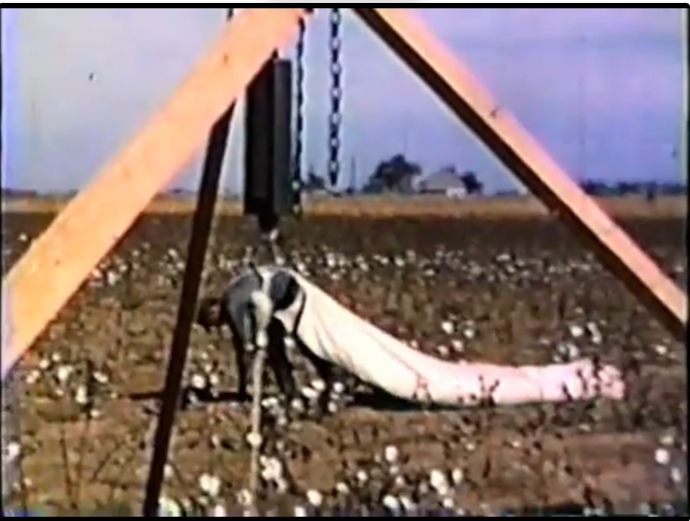
These pictures capture an in-between technology stage. In this time, children’s labor was normalized. Nothing was abstracted yet—every boll counted. Later systems will optimize for speed and acreage. This one still optimized for total yield per field. The cotton stripper represented mechanization, missed cotton and imperfection. This led to later hand-gathering to gather anything missed. This tells us that efficiency mattered, but completeness still mattered more.
Mechanized harvest and human recovery
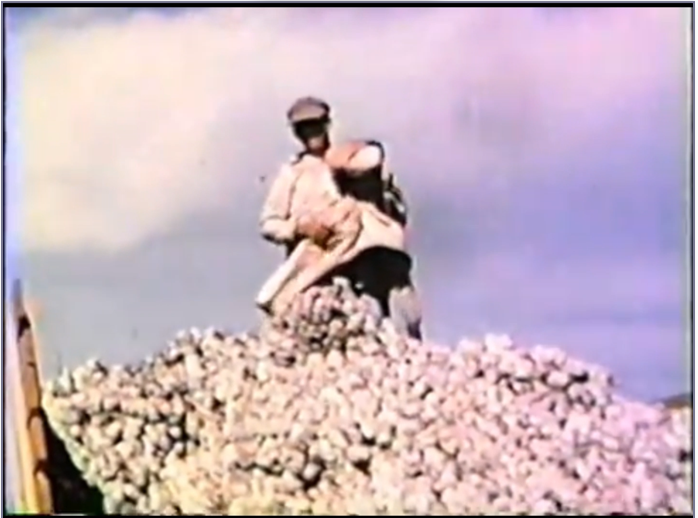
This picture shows a trailer filled by a human labor. People worked on foot with long canvas sacks, bending, stooping, dragging weight across uneven ground to accomplish this. This was not inefficiency — it was the system as it existed. The machine later maximized speed and volume. These people maximized completeness and value. Together, they formed the evolution of the harvest process over time.
Water in the Field
This was before plastic arrived on the scene. Water was carried to the field in glass gallon bottles wrapped in burlap sacks. Cloth water sacks were also used ; evaporative cooling/sweating in the heat kept the water drinkable. By midday, the water would be warm — but it was life.
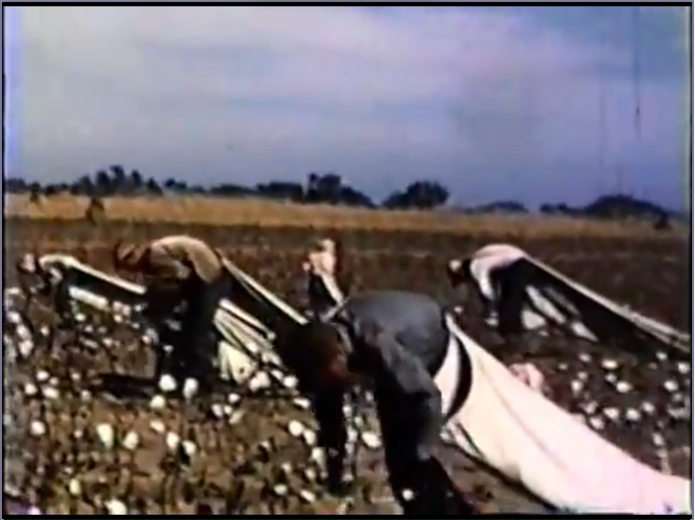
The sacks themselves matter
Sacks came in different sizes to match strength and age. Those long canvas sacks distributed weight along the back. It caused a pull against the shoulders and spine, and required a particular gait and rhythm. These were not casual tools. They shaped the body over time.
The Three Passes
Cotton was not harvested all at once. The field was walked two or three times, weeks apart: The first pass was the money pass. It gathered fully opened, fluffy bolls of clean, high-grade cotton. It was easiest to pull, and had the least trash. This was the most valuable cotton. The second pass — the work pass gathered newly opened bolls that had matured since the first pass. This was still good cotton, but more uneven. It required more stooping, and more judgment. The final pass — the salvage pass — gathered bolls that never fully opened. It had shorter fibers, and lower quality. It was pulled because nothing was wasted. The final pass was hardest on the hands and the slowest work.
Scale and openness
“Harvest time.” Two words. No elaboration needed. That implied that everyone in the room understood the stakes. Because the harvest was urgent, school schedules could pause so younger family members could work in the field. Harvest is a season, not an event and effort is assumed, not explained. The wide shots show a flat horizon, no shelter, no shade, and no interruption. This was labor done fully exposed to wind, sun, cold, and repetition.
Family labor is still assumed.
The people harvesting are not hired crews. They are family, neighbors, children and elders. This is the work that disappears first when irrigation stabilizes yields, harvesters improve and labor becomes externalized. It captures the somatic cost before it vanished. This is the moment where endurance is still personal, but the future is already mechanical.
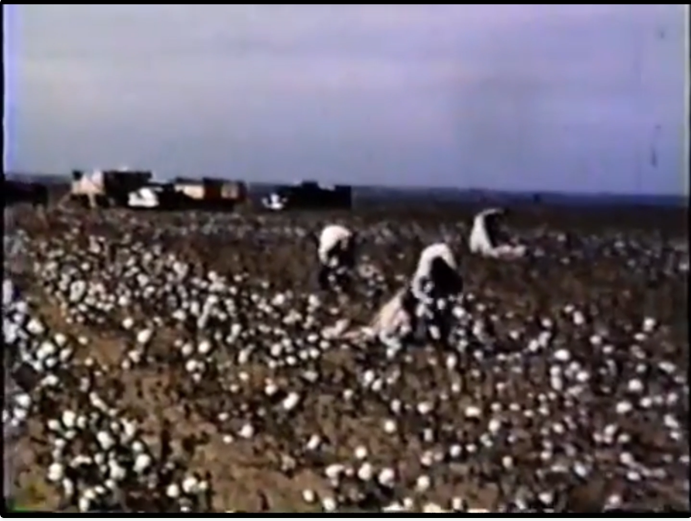
The background equipment in this picture quietly expands the story from “harvest labor” into how a whole farm system operated at once. Behind the hand pickers and the filled trailer, we see tractors parked or idling, trailers positioned for loading, and trucks waiting their turn. This is orchestration, not improvisation. Even though hand labor is still essential, the day is planned around machine flow. Harvest is no longer “field-by-field”; it’s system-wide, with equipment, people, and timing interlocked.
Mechanization did not eliminate labor — it rearranged it
These pictures show an in-between era. The machines remove the bulk, and humans recover the remainder, Full mechanized harvesting is not yet complete. Neither is hand labor gone. This is the hybrid phase.
Just like in other pictures, this shows newer machinery alongside older tractors, mismatched trailers, and equipment that came from different owners. That reinforces two things. This is not a single-owner, uniform setup It is a harvest that draws on whatever works, not whatever matches. It shows that efficiency comes from coordination, not standardization. It shows that trucks mattered as much as tractors
The presence of road trucks in the background is easy to miss, but it’s crucial. It tells us cotton is moving off the farm, not just to a nearby gin later. Roads, bridges, and timing matter immediately. This harvest is tied into the regional economy (Clarendon / Memphis / beyond).
Why this matters emotionally, not just technically
The foreground shows bent backs, dragging sacks. The background shows machines waiting patiently. That visual contrast says something profound: machines reduce labor, but they don’t yet replace it. The human body is still the final quality-control mechanism. This shows a time when people, animals, machines, and roads all mattered at once. Nothing was yet disposable and nothing was yet fully optimized. Soon, harvesters improve, irrigation stabilizes yields, labor externalizes, equipment standardizes, and bodies disappear from the picture. But right here, they’re all still present — foreground and background together.
Next dirt roads to travel:
Daily Life – Maybe these activities didn’t happen every day, but they were typical tasks. Some varied by the time of year, and some were truly everyday occurrences.
Channel 3 – Daily Life
There are places that never learned how to stay on a map. They lived instead in directions. Named by distance, memory, and need. 23 miles northeast of Silverton.
23 Miles NE of Silverton
A regular farm activity the entire family would participate in was hoeing cotton. This was done in the heat of summer and the middle of the growing season.
Hoeing Cotton