
The Interdependence of Brice, Lakeview, Clarendon, and Memphis
This is an exploration of the history of Brice, Lakeview, Clarendon and Memphis in the years between 1935-1960. This period is right in the seam where small communities still functioned as “daily life nodes,” but the regional gravity was pulling services into fewer towns. My Dad, my grandparents, aunts and uncles were raised there. My grandparents lived very near the Post Office in Brice. As I recall, it was not much more than two rooms with the postman and his wife living in the back room. I am interested in the history of the towns and how they were inter-dependent.
A landscape that requires interdependence

The eastern Texas Panhandle doesn’t support isolated self-sufficiency. It supports distributed living. Distances are long. Resources are uneven. Population is thin. So what emerged was not a hierarchy but a network of roles. Each town specialized — not by planning, but by necessity.
Interdependence, in plain terms (1935–1960):
- Brice was close-to-the-land daily life (mail, school, gin era trailing into consolidation).
- Lakeview was larger rural market, social “Saturday night” energy, later thinning.
- Clarendon was durable services, commerce, and institutions that absorb functions as smaller places lose them.
- Memphis was the place that met the larger outer world.
Not a ladder — a circuit
What’s important is this: these towns were not ranked. They were interdependent. A family could live in Brice, gin or sell in Lakeview, register, school, worship in Clarendon, and escalate to Memphis when needed. This created a circuit, not a ladder. Your family didn’t “move up” the towns. They moved through them.
Brice didn’t disappear because it failed. It receded because its purpose was relational, not monumental. Clarendon leaves records. Memphis leaves infrastructure. Brice leaves memory. And memory becomes its own form of permanence.
Interdependence, not decline
This is important—and often misunderstood: What happened between 1935 and 1960 wasn’t “failure.” It was concentration. Schools consolidate. Mail routes consolidate. Services consolidate. Roads improve, distances shrink
But the human memory doesn’t consolidate as neatly.
Brice, Lakeview, Clarendon, Memphis (1935–1960): a four-node ecosystem
Here’s the key idea that makes this period intelligible: These towns weren’t competing. They were specializing.
Brice — intimacy and immediacy
Brice in this period is: close-knit, small, deeply relational
Lakeview — social gravity, briefly sustained
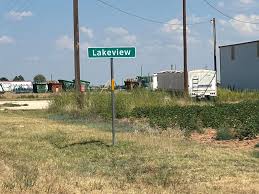
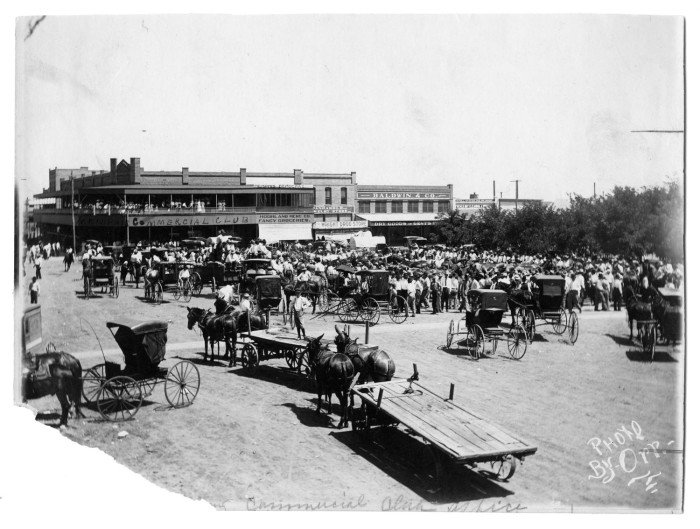
Lakeview functioned as a market town, a social hub, and a place for Saturday night, commerce, and congregation. But Lakeview had already been wounded: It had repeated fires, Depression-era losses and later bank consolidation. So by the late 1940s–early 1950s, it’s holding on—but thinning.
Clarendon — institutional memory
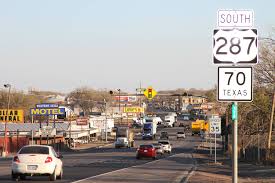
Clarendon survives because it holds county functions, banks, equipment suppliers, churches, schools, and repair knowledge It becomes the place you have to go—not because you want to, but because systems now require it.
Memphis — the outward-facing node
Memphis enters the picture when: volume increases, regulation intensifies, markets expand, or specialization exceeds county scale. Memphis offered rail access, larger hospitals, broader commerce, regional governance, and connections beyond Hall County. You didn’t go to Memphis every week. But when you did, it mattered. Memphis is where the Panhandle touched the larger economy.
Functionality
Brice
TSHA’s Brice entry is unusually specific and lverifies that there was a modest post office. The post office began (1899), moved to the historic Brice site in 1903, and Brice served a fertile farm area at its 1920s peak (stores, gin, school, churches). The key interdependence moments for your 1935–1960 window: Brice school consolidated with Lakeview in 1952 and that Brice post office closed in 1954. Mail was then routed through Clarendon
That single line—mail was then routed through Clarendon—quietly describes a whole new daily geography: fewer local errands, more driving, more dependence on the larger hub.
Brice was the lived-in edge
Brice was never meant to be complete. It was proximate, not central. Brice’s role was homes, fields, windmills, pens, irrigation, family labor, and seasonal rhythms. It was where life actually happened — daily, bodily, repetitively. Brice did not try to be: a courthouse, a market hub, a medical center, or a cultural anchor. It leaned outward by design. The post office wasn’t about volume—it was about: names, faces, rhythms, and trust. When Brice’s post office closed in the early 1950s and mail was routed through Clarendon, that wasn’t just administrative—it was existential. It said “Daily life now points elsewhere.”
Lakeview
Lakeview had already weathered big shocks before this time window. It had fires (1918, 1919, and again a business district fire in 1930). The Depression threatened it, but it had a brief surge in the late 1940s before declining. By the early 1950s, its bank merged with the First National Bank of Memphis (1953). Lakeview is one of the “middle” nodes—big enough to be lively, not big enough to keep every institution forever once consolidation began.
Lakeview was the agricultural hinge
Lakeview occupies a fascinating middle role. It was closer to the land than Clarendon, more commercial than Brice, and deeply agricultural. Lakeview handled gins, grain elevators, cotton traffic, seasonal labor, agricultural equipment, and field logistics. Think of Lakeview as a hinge town — where raw production met organized processing.
If Brice was where the work happened, Lakeview was where the work moved. This explains why family movement between Brice and Lakeview feels casual and frequent — it was.
Clarendon
Clarendon’s TSHA entry shows why it becomes the anchor. By 1950 it had 18 businesses, 10 churches, and a population of 2,577, and it’s described as an agribusiness and light manufacturing center (gins, hatcheries, farm/road equipment, etc.). It also notes WPA-era (probably Civilian Conservation Corps — CCC) work in the 1930s such as dams and terraces to manage flooding in town.
Clarendon was the civic spine
Clarendon functioned as the administrative and social backbone. It held the county courthouse, brand records, schools, churches, banks, doctors, newspapers, and supply stores. Clarendon translated rural life into records. When something needed a signature, a stamp, a diagnosis, a diploma, a sermon, or legal recognition — you went to Clarendon.
It’s no accident that brands are registered there, land deeds pass through there, and family milestones anchor there. Clarendon was the place where life became official.
A Historical Perspective
Here are links to the Texas State Historical Association for each of these towns. It has a historical background including location, origin and significant events.
Next dirt roads to travel
A town is not a point. It is a pattern. Brice was a household. Clarendon was a room. Lakeview was a hallway. Memphis was a door. None sufficient alone. All necessary together.
A Fractal Town
The land did not ask to be conquered. Rows were drawn not as lines of dominance but as agreements with wind and water, with what would grow if given half a chance.
Rows and Rooms
The plants and animals around Brice are a very specific ecological mix — where short-grass prairie, sandy draws, and disturbed farmland overlap.
The Plants of Brice The Animals of Brice