Category: Brice

  • Grandpa’s Tractor and the Old Home Place

    Grandpa’s Tractor and the Old Home Place
    Grandpa’s Tractor

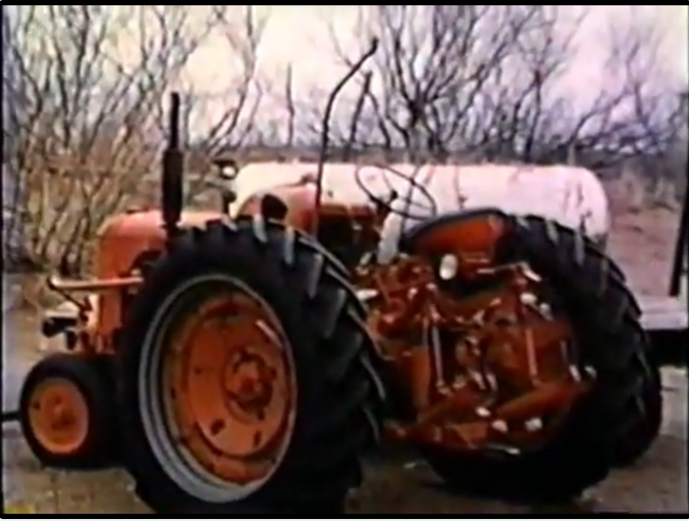
    Old tractor and fuel tank
    Old tractor and fuel tank

    This frame shows an orange/red row-crop tractor with narrow front (tricycle-style). It has high rear wheels, a low-slung engine, and upright exhaust. The design is strongly consistent with Farmall tractors (H or M series), widely used from the late 1930s through the 1950s. The operator was seated upright, hands on wheel, posture relaxed but practiced. This is not a novelty tractor. It’s a primary workhorse, already familiar to its operator.

    This image is significant because it shows two distinct fuel tanks. This is easy to miss, but profound. The cylindrical horizontal tank on a stand is metal and has rounded ends. It is elevated slightly above ground and is plumbed, not portable. This is almost certainly a gasoline or diesel storage tank used for tractors, trucks, and possibly irrigation engines later. Elevation matters, and gravity feed simplifies fueling and reduces pump dependence. The tractor fuel tank ties the farm to weather, seasons, and soil conditions. The butane tank ties the home to comfort, predictability, and extended day/night use (especially post-electrification). Together, they mark the moment when survival became managed, not merely endured.
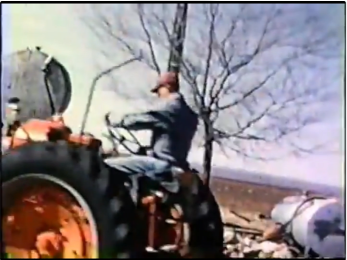
    Grandpa on his tractor at the old home place
    Grandpa on his tractor at the old home place

    The large rounded tank near the house is consistent with a butane/propane tank. It was typically used for home heating, cooking, possibly water heating. The coexistence of both tanks tells us something crucial; energy was layered, not unified. Electricity existed—but fuel autonomy still mattered.

    The house and immediate surroundings

    We also see a wood-frame house with shingled roof and a mature deciduous tree close to the structure (likely planted intentionally for windbreak/shade). There are outbuildings nearby (not decorative—completely functional). There is no pavement or ornamental fencing. This is a working yard, not a domestic display space.
    Everything visible serves shelter, fuel, food, or labor. Nothing here is redundant. This is not pioneer hardship or modern consolidation. This is a balanced system that is mechanized, but human-scaled. It may have been electrified, but it was still fuel-secure and productive, but still intimate.
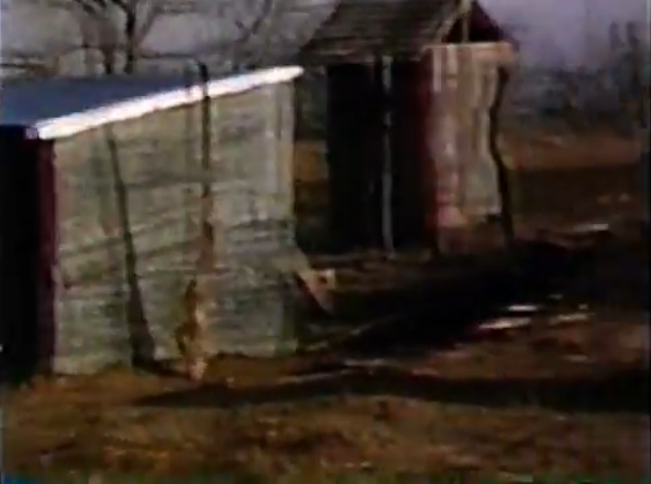
    Outbuilding and outhouse
    Outbuilding and outhouse

    The tractor, tanks, and house formed a closed loop. It functioned by land to fuel, fuel to machine, machine to labor, labor to home, and home back to land, At this point, the loop was not yet been broken by specialization.

    About Grandpa and the tractor

    Grandpa’s posture, proximity to the house, and comfort with the machine show ownership and probably long-term daily use. He was not a hired hand and this was not a demonstration moment; this is home ground, not a field visit. The tractor is part of the household’s rhythm.
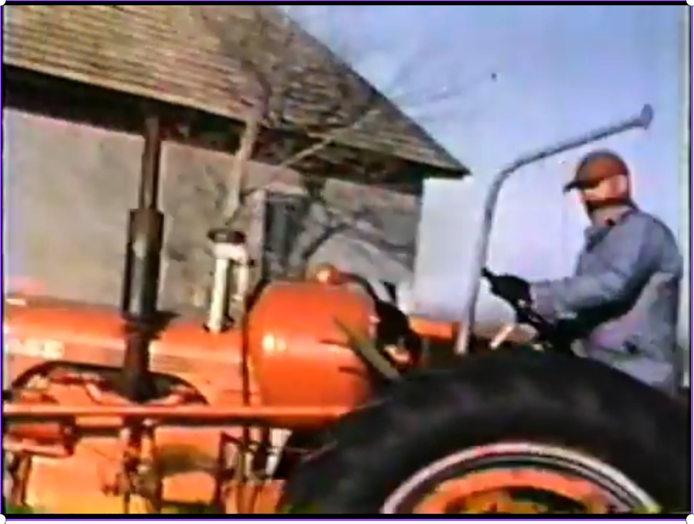
    Grandpa on his tractor at the old home place
    Grandpa on his tractor at the old home place

    These scenes are not dramatic. That’s what makes them powerful. History books show dust storms, crises, and breakthroughs. These scenes show continuity, and continuity is what actually carries families—and regions—forward.


    Next dirt roads to travel:

    The plants and animals around Brice are a very specific ecological mix — here are a few a few details about each plant of the area.
    The Plants Around Brice


    The plants and animals around Brice are a very specific ecological mix — here are a few a few details about each plant of the area.
    The Animals Around Brice

    Deep plowing after cotton harvest served to bury stalks for pest control, especially boll weevil. It also incorporated residue and to reset the soil surface.
    Deep Plowing After Cotton Harvest

  • The Interdependence of Brice, Lakeview, Clarendon, and Memphis

    The Interdependence of Brice, Lakeview, Clarendon, and Memphis

    This is an exploration of the history of Brice, Lakeview, Clarendon and Memphis in the years between 1935-1960. This period is right in the seam where small communities still functioned as “daily life nodes,” but the regional gravity was pulling services into fewer towns. My Dad, my grandparents, aunts and uncles were raised there. My grandparents lived very near the Post Office in Brice. As I recall, it was not much more than two rooms with the postman and his wife living in the back room. I am interested in the history of the towns and how they were inter-dependent.

    A landscape that requires interdependence

    Brice, Texas
    Brice, Texas

    The eastern Texas Panhandle doesn’t support isolated self-sufficiency. It supports distributed living. Distances are long. Resources are uneven. Population is thin. So what emerged was not a hierarchy but a network of roles. Each town specialized — not by planning, but by necessity.

    Interdependence, in plain terms (1935–1960):

    • Brice was close-to-the-land daily life (mail, school, gin era trailing into consolidation).
    • Lakeview was larger rural market, social “Saturday night” energy, later thinning. 
    • Clarendon was durable services, commerce, and institutions that absorb functions as smaller places lose them.
    • Memphis was the place that met the larger outer world.

    Not a ladder — a circuit

    What’s important is this: these towns were not ranked. They were interdependent. A family could live in Brice, gin or sell in Lakeview, register, school, worship in Clarendon, and escalate to Memphis when needed. This created a circuit, not a ladder. Your family didn’t “move up” the towns. They moved through them.

    Brice didn’t disappear because it failed. It receded because its purpose was relational, not monumental. Clarendon leaves records. Memphis leaves infrastructure. Brice leaves memory. And memory becomes its own form of permanence.

    Interdependence, not decline

    This is important—and often misunderstood: What happened between 1935 and 1960 wasn’t “failure.” It was concentration. Schools consolidate. Mail routes consolidate. Services consolidate. Roads improve, distances shrink

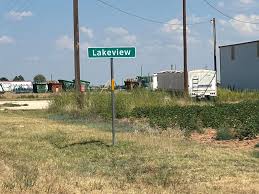
    Lakeview, Texas
    Lakeview, Texas

    But the human memory doesn’t consolidate as neatly.

    Brice, Lakeview, Clarendon, Memphis (1935–1960): a four-node ecosystem

    Here’s the key idea that makes this period intelligible: These towns weren’t competing. They were specializing.

    Brice — intimacy and immediacy

    Brice in this period is: close-knit, small, deeply relational

    Lakeview — social gravity, briefly sustained

    Lakeview functioned as a market town, a social hub, and a place for Saturday night, commerce, and congregation. But Lakeview had already been wounded: It had repeated fires, Depression-era losses and later bank consolidation. So by the late 1940s–early 1950s, it’s holding on—but thinning.

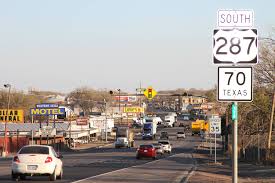
    Clarendon, Texas
    Clarendon, Texas

    Clarendon — institutional memory

    Clarendon survives because it holds county functions, banks, equipment suppliers, churches, schools, and repair knowledge It becomes the place you have to go—not because you want to, but because systems now require it.

    Memphis — the outward-facing node

    Memphis enters the picture when: volume increases, regulation intensifies, markets expand, or specialization exceeds county scale. Memphis offered rail access, larger hospitals, broader commerce, regional governance, and connections beyond Hall County. You didn’t go to Memphis every week. But when you did, it mattered. Memphis is where the Panhandle touched the larger economy.

    Functionality

    Brice

    TSHA’s Brice entry is unusually specific and lverifies that there was a modest post office. The post office began (1899), moved to the historic Brice site in 1903, and Brice served a fertile farm area at its 1920s peak (stores, gin, school, churches). The key interdependence moments for your 1935–1960 window: Brice school consolidated with Lakeview in 1952 and that Brice post office closed in 1954. Mail was then routed through Clarendon 

    That single line—mail was then routed through Clarendon—quietly describes a whole new daily geography: fewer local errands, more driving, more dependence on the larger hub.

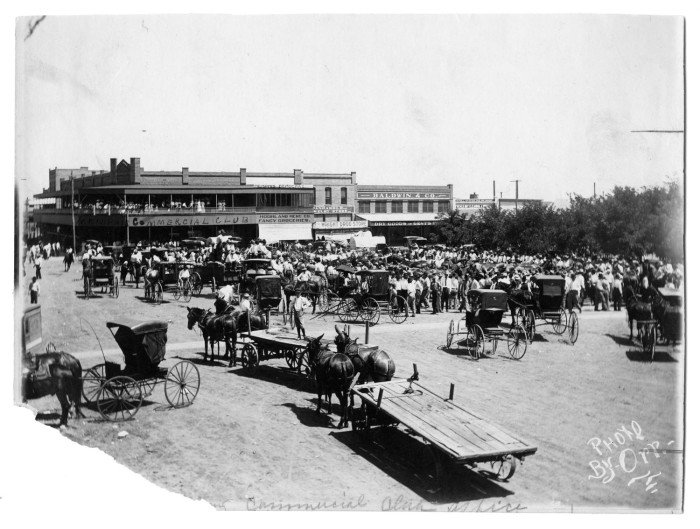
    Early Memphis, Texas
    Early Memphis, Texas

    Brice was the lived-in edge

    Brice was never meant to be complete. It was proximate, not central. Brice’s role was homes, fields, windmills, pens, irrigation, family labor, and seasonal rhythms. It was where life actually happened — daily, bodily, repetitively. Brice did not try to be: a courthouse, a market hub, a medical center, or a cultural anchor. It leaned outward by design. The post office wasn’t about volume—it was about: names, faces, rhythms, and trust. When Brice’s post office closed in the early 1950s and mail was routed through Clarendon, that wasn’t just administrative—it was existential. It said “Daily life now points elsewhere.

    Lakeview

    Lakeview had already weathered big shocks before this time window. It had fires (1918, 1919, and again a business district fire in 1930). The Depression threatened it, but it had a brief surge in the late 1940s before declining. By the early 1950s, its bank merged with the First National Bank of Memphis (1953). Lakeview is one of the “middle” nodes—big enough to be lively, not big enough to keep every institution forever once consolidation began.

    Lakeview was the agricultural hinge

    Lakeview occupies a fascinating middle role. It was closer to the land than Clarendon, more commercial than Brice, and deeply agricultural. Lakeview handled gins, grain elevators, cotton traffic, seasonal labor, agricultural equipment, and field logistics. Think of Lakeview as a hinge town — where raw production met organized processing.

    If Brice was where the work happened, Lakeview was where the work moved. This explains why family movement between Brice and Lakeview feels casual and frequent — it was.

    Clarendon

    Clarendon’s TSHA entry shows why it becomes the anchor. By 1950 it had 18 businesses, 10 churches, and a population of 2,577, and it’s described as an agribusiness and light manufacturing center (gins, hatcheries, farm/road equipment, etc.).  It also notes WPA-era (probably Civilian Conservation Corps — CCC) work in the 1930s such as dams and terraces to manage flooding in town. 

    Clarendon was the civic spine

    Clarendon functioned as the administrative and social backbone. It held the county courthouse, brand records, schools, churches, banks, doctors, newspapers, and supply stores. Clarendon translated rural life into records. When something needed a signature, a stamp, a diagnosis, a diploma, a sermon, or legal recognition — you went to Clarendon.

    It’s no accident that brands are registered there, land deeds pass through there, and family milestones anchor there. Clarendon was the place where life became official.


    A Historical Perspective

    Here are links to the Texas State Historical Association for each of these towns. It has a historical background including location, origin and significant events.

    The History of Brice

    The History of Lakeview

    The History of Clarendon

    The History of Memphis


    Next dirt roads to travel

    A town is not a point. It is a pattern. Brice was a household. Clarendon was a room. Lakeview was a hallway. Memphis was a door. None sufficient alone. All necessary together.
    A Fractal Town

    The land did not ask to be conquered. Rows were drawn not as lines of dominance but as agreements with wind and water, with what would grow if given half a chance.
    Rows and Rooms

    The plants and animals around Brice are a very specific ecological mix — where short-grass prairie, sandy draws, and disturbed farmland overlap.
    The Plants of Brice The Animals of Brice

  • Life in Brice During the Fifties

    Life in Brice

    This is an exploration of the history of Brice, Lakeview, Clarendon, and Memphis in the years between 1935-1960. My Dad, great-grandparents and grandparents, aunts and uncles were raised there. I am interested in the history of the towns and how they were inter-dependent.

    Crop spraying airplane, flagger in the field
    Crop spraying airplane, flagger in the field

    It also explores the timing and conditions under which irrigation was introduced to the farmland of this area, and the impact irrigation had. Before irrigation, my grandparents and their neighbors were dryland farmers, and were at the mercy of the weather. After irrigation, my father, his parents and siblings would have to “move the pipe” every morning and evening to move the sprinklers to the next swath of coverage.

    Also, parts of this will explore an area of the panhandle of Texas that was once known as Antelope Flat. It is just south of the Prairie Dog Fork of the Red River. My forefathers, grandparents, and my Dad once lived there.

    I often say that “we stand on the backs of the giants who came before us”. Then I question “how do we want to live into that as a future?” We’re not standing on their backs —we’re standing in their posture. That posture showed up as how they showed up for neighbors, how they absorbed risk, how they shared burden, and how they accepted limits without surrender. Those are not abstract virtues. They are embodied choices,

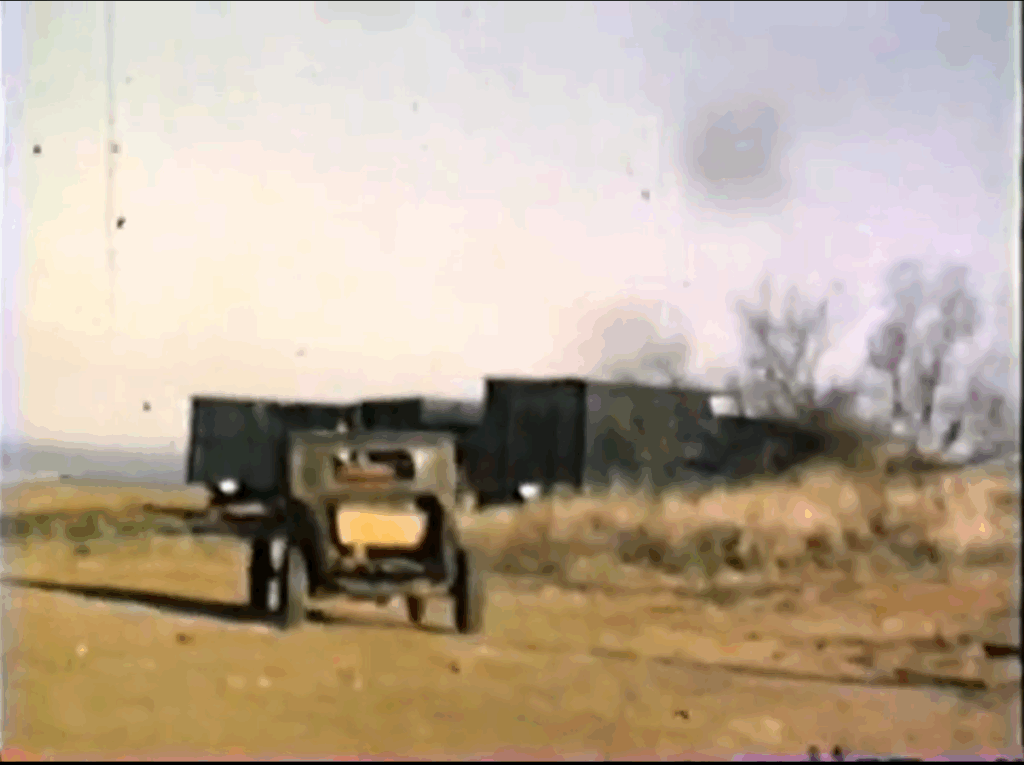
    Old Ford on dirt road
    Old Ford on dirt road

    The giants we speak of weren’t towering because they dominated.
    They were giants because they carried weight together — and left behind footholds instead of monuments.

    How do we want to live into that as a future?” That question is not answered by better technology, higher resolution, or faster systems. It is answered by where we place trust, how we distribute responsibility, and whether we leave room for human anchors. Progress isn’t about removing humans from the system. It’s about keeping humans visible within it.

    The underlying intent of this website is to explore how everything is an expression of interconnectedness. This is an exploration of the interdependence of these towns at that time. Interconnectedness is not only a physical or social fact but a spiritual insight. It reveals that separateness is an illusion sustained by limited perception. In this sense, interconnectedness is not merely an idea; it is the living geometry of existence itself; a reminder that every part contains the whole, and the whole depends on every part.


    Next dirt roads to travel:

    The eastern Texas Panhandle didn’t support isolated self-sufficiency. Distances were long. Population was thin. Each town specialized — not by planning, but by necessity.
    The Commerce of Brice and Surrounding Area

    Antelope Flat functioned as a micro-community, even if it never incorporated or left much of a paper trail. It is what historians often call a service node rather than a town
    Antelope Flat

    The plants and animals around Brice are a very specific ecological mix — here are a few a few details about each plant and animal of the area.
    The Plants of Brice The Animals of Brice