Antelope Flat
What is the name — Antelope Flat or Antelope Flats? Antelope Flat (no “S”) is real and persistent. That is what the residents and locals called it. Antelope Flat is not ambiguous in lived reality — only in paperwork. Antelope Flat—sometimes with an s, sometimes without—was not confused about itself, even if the records were. It did not argue with spellings. It accepted presence as the final word.
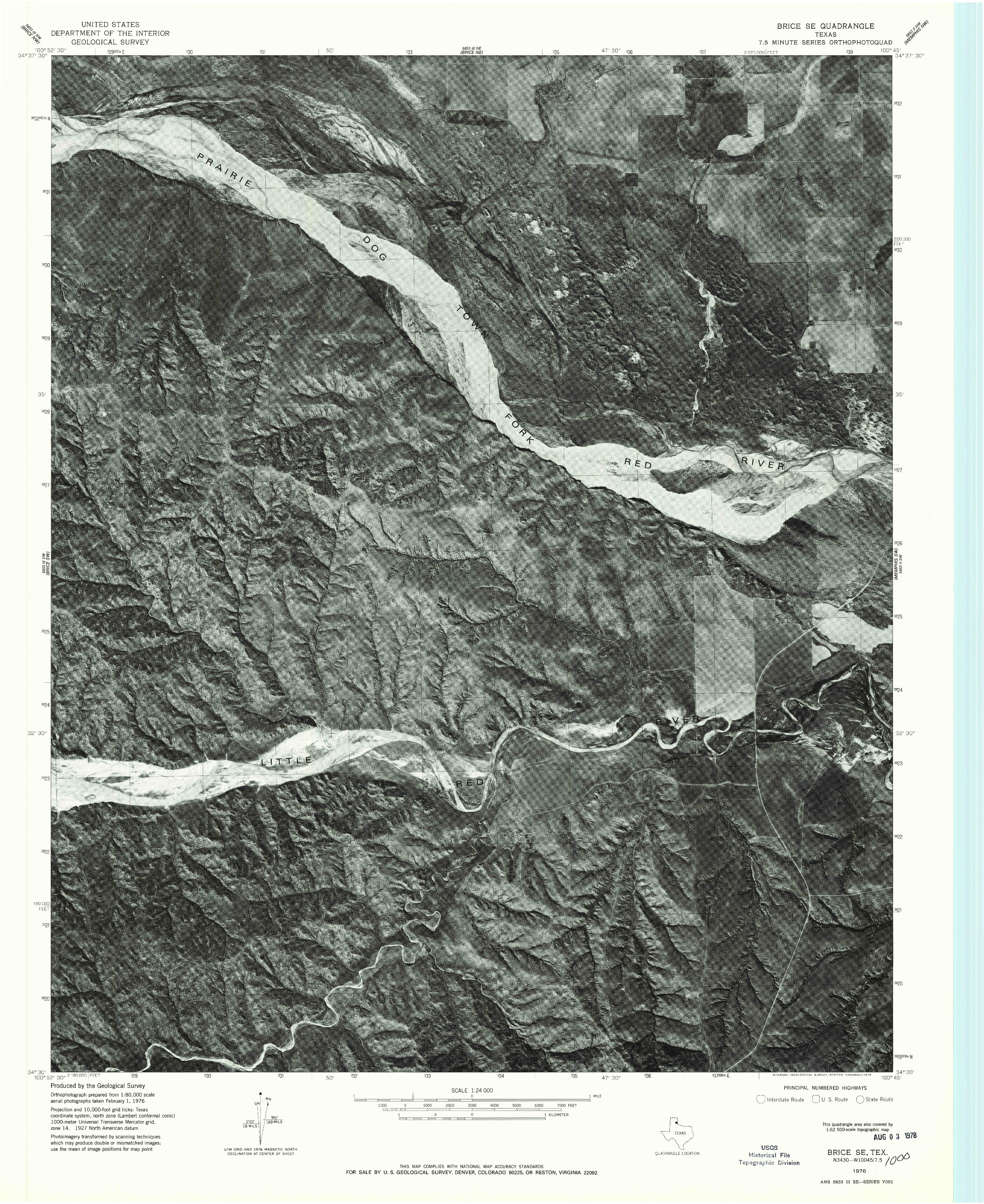
The ambiguity apparently begins when it appears explicitly labeled as “Antelope Flats” on the 1960 USGS Brice quad (bottom-left quadrant, south of the Prairie Dog Town Fork of the Red River). The name persists across several generations, which usually means it was already well-established locally before formal mapping. Its placement corresponds to grazing land, limited cultivation, and low relief.
Antelope Flat functioned as a micro-community, even if it never incorporated or left much of a paper trail. It is what historians often call a service node rather than a town. At one time, Antelope Flat had a small grocery / supply store, gasoline availability, a schoolhouse, roads converging, and proximity to a river crossing
Places like Antelope Flat often never appeared in city directories, never had post offices, and vanished quickly once roads, power, or bridges changed, They existed because people needed them, not because they were formally planned. That explains why there’s very little surface evidence today, why maps label the area (Antelope Flat[s]) rather than a town dot. It shows that memory outlasts documentation.
Small settlements that lasted longer than expected often had strong local school boards, Community buy-in for teachers, multi-grade schoolhouses that doubled as civic centers, and perhaps even a willingness to tax themselves (rare but decisive).
In the published record, Antelope Flat shows up less as a platted “town” and more as a place-name tied to Antelope Creek and the ranchland around it. Texas State Historical Association notes that Antelope Creek flows northeast to the Prairie Dog Town Fork of the Red River, and that the surrounding area—once part of the Shoe Bar Ranch—became the site of “Antelope Flat,” described as a sparse ranching community. The “origins” are likely ranch-and-water origins: a named flat along a wet-weather creek that mattered because it provided grass, stock water, a recognizable landmark on the caprock country’s edge, and a way to describe where someone lived without there necessarily being a formal town.
The Texas Almanac classifies Antelope Flat as a town that no longer exists. That usually means: no enduring commercial core (post office/store/school) survived long enough to keep it on modern road maps once rural consolidation accelerated (school consolidation, mail routing changes, mechanization, fewer farm/ranch families per square mile).
Next dirt roads to travel:
Older crossings often sat on county roads, section lines, and routes that made sense for who lived there, not who passed through.
The Antelope Flat Bridge
Gas pumps with hand pumps and glass measuring gauges, known as Visible Gas Pumps, worked by manually pumping fuel into a large, calibrated glass globe atop the pump.
Antelope Flat commerce
Baseball teams in places like Antelope Flat served multiple roles: Recreation, reputation, and inter-community bonding.
Antelope Flat Baseball Team