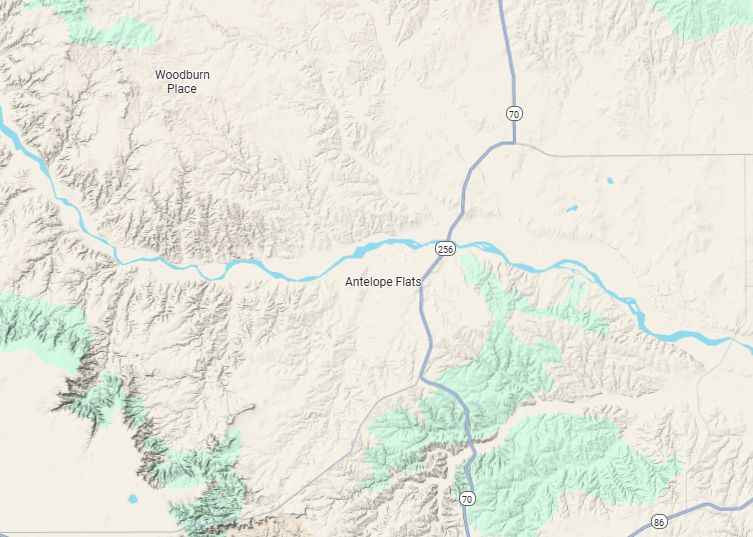
Highway 256 Bridge
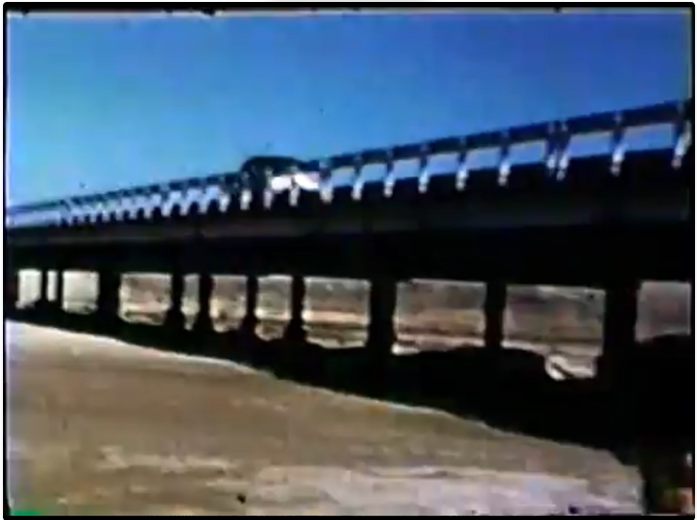
TX-256 is a state-maintained connector, upgraded mid-century. It crosses the Prairie Dog Town Fork of the Red River. Its bridges were rebuilt to modern standards earlier than many county roads. The guardrail style and spacing match known TX highway bridges of that era. These pictures almost certainly shows the replacement bridge, not the earlier one tied to Antelope Flat.
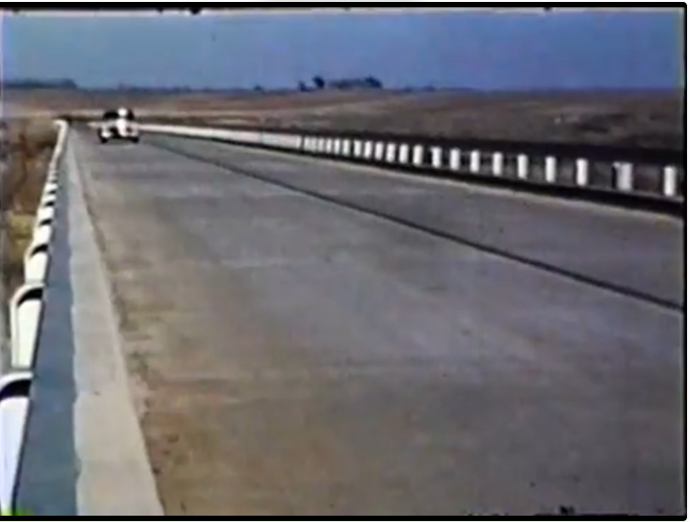
It has a concrete deck, concrete curb with short, evenly spaced vertical posts (not a truss, not timber), it is two-lane width, and has an engineered guardrail rhythm, uniform spacing. This is not a temporary, county-built, or early ranch bridge. This is a state-standard highway bridge, very likely post-WWII (late 1940s–1950s).
This bridge appears to be engineered; the roadway is slightly crowned, there is a gentle curve immediately after the bridge, and the approach is not aligned to a strict section line. Older bridges ran straight, followed property lines, and were cheaper to replace than to realign. This bridge follows floodplain engineering, prioritizes speed and flow, and anticipates increasing traffic That is typical of mid-century highway design.
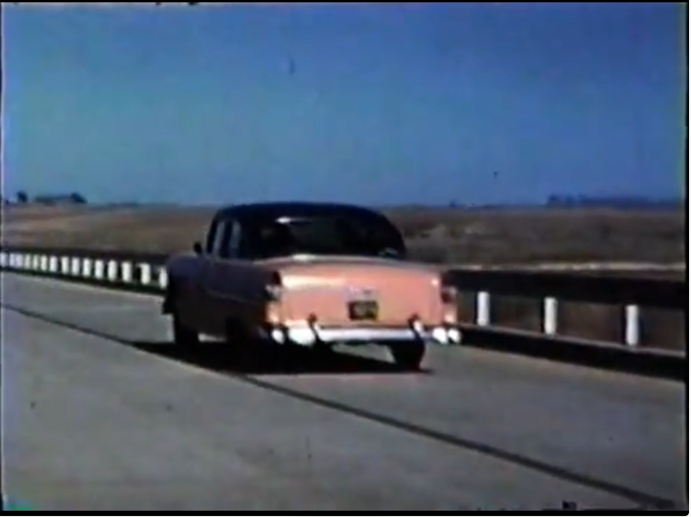
The vehicles on the bridge provide a dating clue. There is a mid-1950s sedan (rounded rear, chrome bumper) and a two-tone car approaching from the opposite direction. That places the picture comfortably in the mid-to-late 1950s, possibly brushing early 1960s
Next dirt roads to travel:
Older crossings often sat on county roads, section lines, and routes that made sense for who lived there, not who passed through.
The Antelope Flat Bridge
When the bridge failed, it didn’t end visiting. It revised it. Cars came as far as they could. “We’re coming over. Meet us at the bridge.”
Meeting at the Broken Bridge
Gas pumps with hand pumps and glass measuring gauges, known as Visible Gas Pumps, worked by manually pumping fuel into a large, calibrated glass globe atop the pump.
Antelope Flat commerce