Grandpa’s Tractor and the Old Home Place
Grandpa’s Tractor
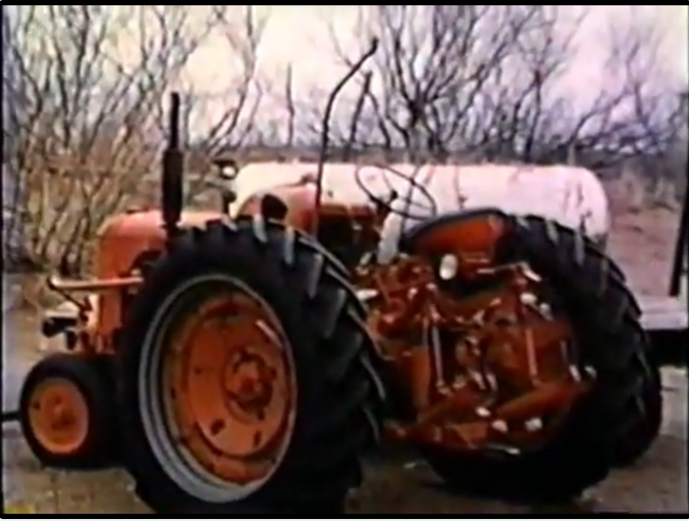
This frame shows an orange/red row-crop tractor with narrow front (tricycle-style). It has high rear wheels, a low-slung engine, and upright exhaust. The design is strongly consistent with Farmall tractors (H or M series), widely used from the late 1930s through the 1950s. The operator was seated upright, hands on wheel, posture relaxed but practiced. This is not a novelty tractor. It’s a primary workhorse, already familiar to its operator.
This image is significant because it shows two distinct fuel tanks. This is easy to miss, but profound. The cylindrical horizontal tank on a stand is metal and has rounded ends. It is elevated slightly above ground and is plumbed, not portable. This is almost certainly a gasoline or diesel storage tank used for tractors, trucks, and possibly irrigation engines later. Elevation matters, and gravity feed simplifies fueling and reduces pump dependence. The tractor fuel tank ties the farm to weather, seasons, and soil conditions. The butane tank ties the home to comfort, predictability, and extended day/night use (especially post-electrification). Together, they mark the moment when survival became managed, not merely endured.
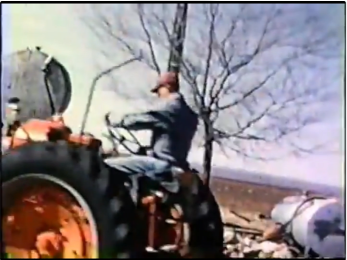
The large rounded tank near the house is consistent with a butane/propane tank. It was typically used for home heating, cooking, possibly water heating. The coexistence of both tanks tells us something crucial; energy was layered, not unified. Electricity existed—but fuel autonomy still mattered.
The house and immediate surroundings
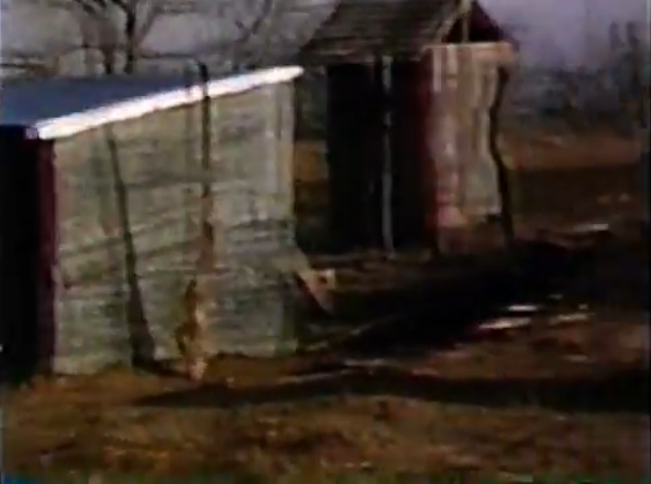
We also see a wood-frame house with shingled roof and a mature deciduous tree close to the structure (likely planted intentionally for windbreak/shade). There are outbuildings nearby (not decorative—completely functional). There is no pavement or ornamental fencing. This is a working yard, not a domestic display space.
Everything visible serves shelter, fuel, food, or labor. Nothing here is redundant. This is not pioneer hardship or modern consolidation. This is a balanced system that is mechanized, but human-scaled. It may have been electrified, but it was still fuel-secure and productive, but still intimate.
The tractor, tanks, and house formed a closed loop. It functioned by land to fuel, fuel to machine, machine to labor, labor to home, and home back to land, At this point, the loop was not yet been broken by specialization.
About Grandpa and the tractor
Grandpa’s posture, proximity to the house, and comfort with the machine show ownership and probably long-term daily use. He was not a hired hand and this was not a demonstration moment; this is home ground, not a field visit. The tractor is part of the household’s rhythm.
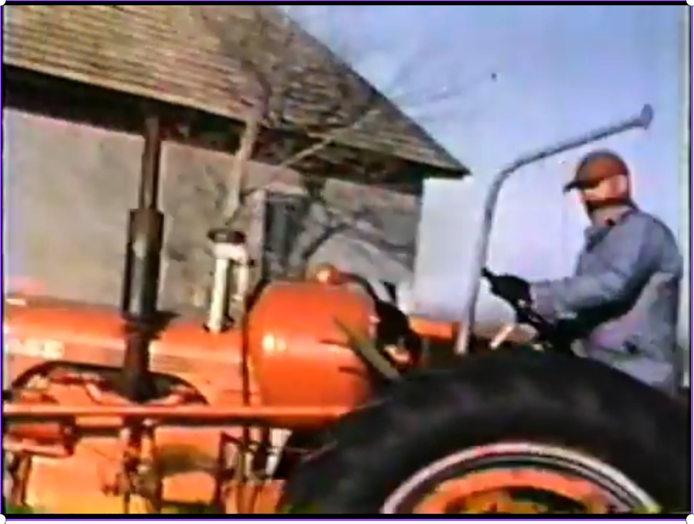
These scenes are not dramatic. That’s what makes them powerful. History books show dust storms, crises, and breakthroughs. These scenes show continuity, and continuity is what actually carries families—and regions—forward.
Next dirt roads to travel:
The plants and animals around Brice are a very specific ecological mix — here are a few a few details about each plant of the area.
The Plants Around Brice
The plants and animals around Brice are a very specific ecological mix — here are a few a few details about each plant of the area.
The Animals Around Brice
Deep plowing after cotton harvest served to bury stalks for pest control, especially boll weevil. It also incorporated residue and to reset the soil surface.
Deep Plowing After Cotton Harvest