The Antelope Flat Baseball Team
This photograph is not incidental—it’s evidence of community identity. Baseball teams in places like Antelope Flat served multiple roles: Recreation, reputation, and inter-community bonding (Brice, Clarendon, Lakeview, Memphis). Teams often played after planting and before harvest on makeshift diamonds near schools or open pasture. This also suggests that baseball was another way families declared their presence. Antelope Flat wasn’t just a place on a map. It was a system of survival —navigated daily by people who shared water, roads, schools, danger, labor, and memory.
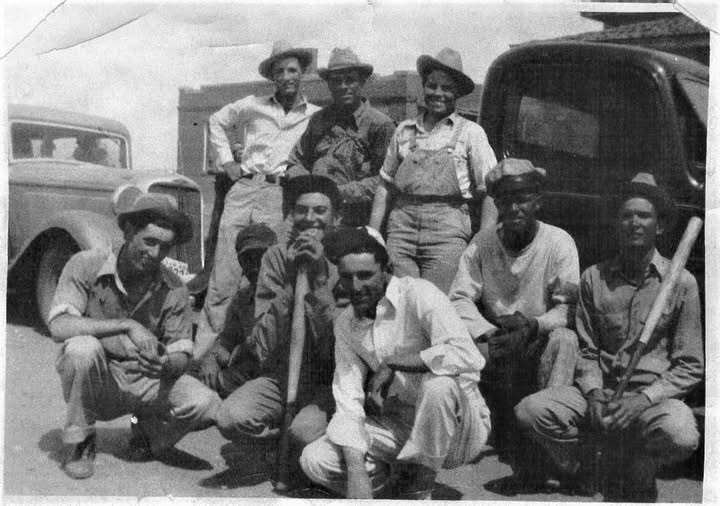
Antelope Flat baseball team. Front row; Andrew Richey, Steve Edens, Leon Sanders, Blackie Durham, Lonzo James, Ray Waldrop Back Row; Cotton Durham, Hugh Sanders, Aubrey Sanders.
Next dirt roads to travel:
The eastern Texas Panhandle didn’t support isolated self-sufficiency. Distances were long. Population was thin. Each town specialized — not by planning, but by necessity.
The Interdependence of Brice, Lakeview, Clarendon, and Memphis
There are places that never learned how to stay on a map. They lived instead in directions. Named by distance, memory, and need. 23 miles northeast of Silverton.
23 Miles NE of Silverton
This is one of the most culturally important attributed , all pitching in to help a neighbor. “If one of us falls behind, we all fall behind.”
Community Planting for a Sick Neighbor