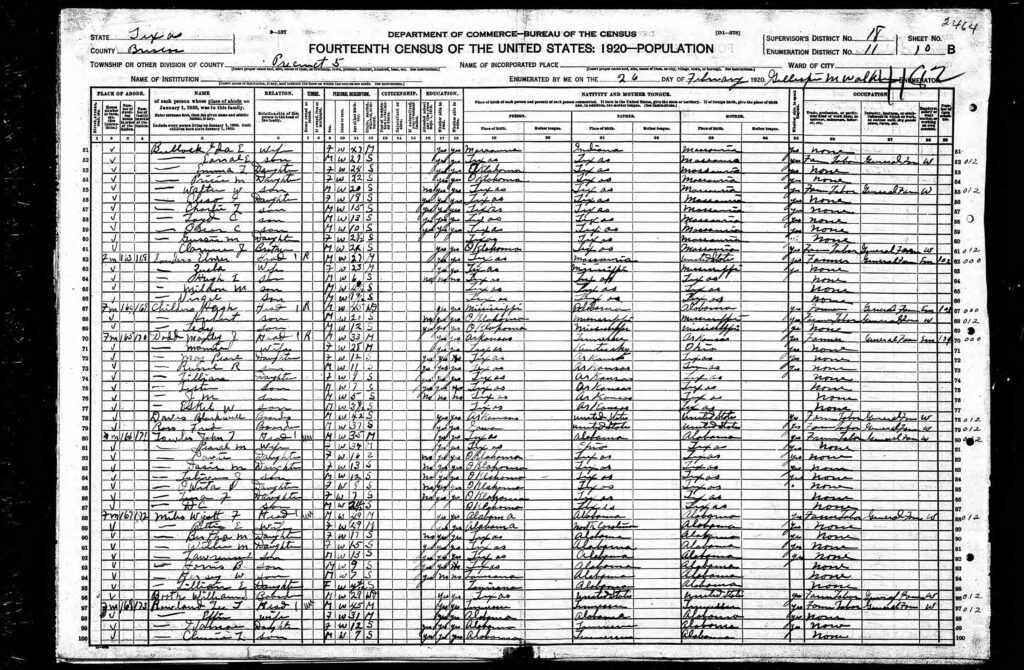
These census records are probably for Antelope Flat. I have not done the research to confirm that this is the census district, but genealogy research and oral history from family place my Great-grandfather Elmer Hugh Sanders at Antelope Flat during these years. The records show that he lived in Antelope Flat for at least thirty years, perhaps more. These images are of the 1920, 1930, 1940 and 1950 censuses. It shows the names of family members and neighbors. It also points to the longevity of Antelope Flat as a community.
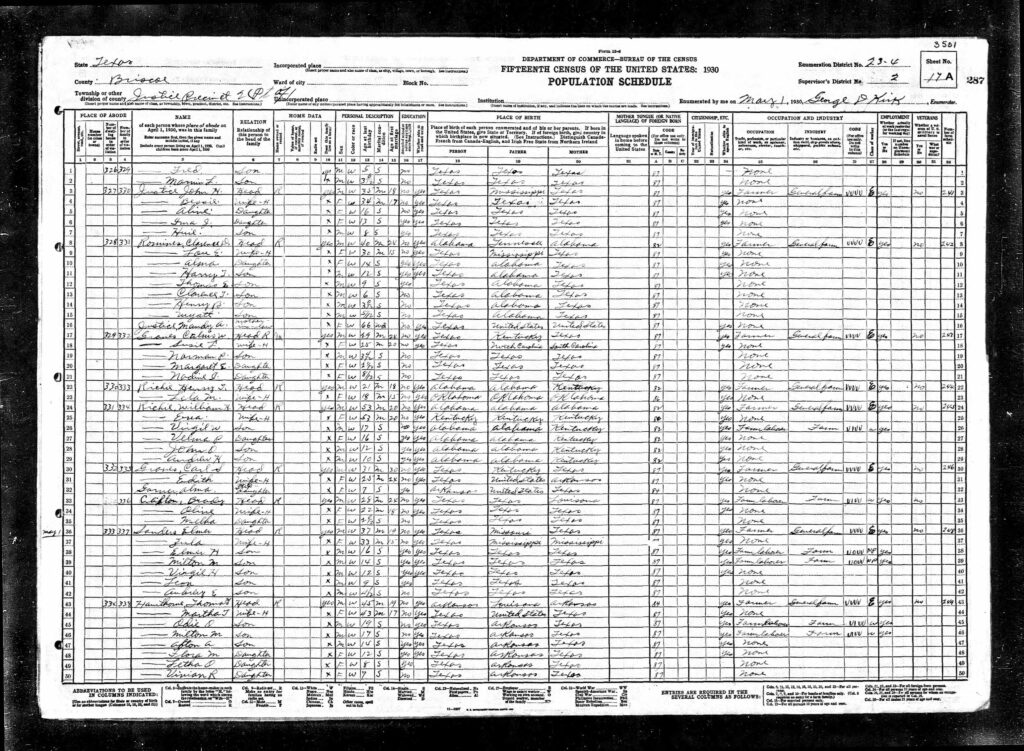
Some of the clues for community are clusters of familiar surnames. Even if “Antelope Flat” isn’t named, adjacency tells a story. The 1940 census, especially, sometimes includes supplemental questions about residence five years earlier — those can quietly confirm movement patterns tied to floods, school closures, or road changes. There may not be a bold headline that says “Antelope Flat, population X” — but we are very likely to find its remnants, and remnants are what is left of Antelope Flat.
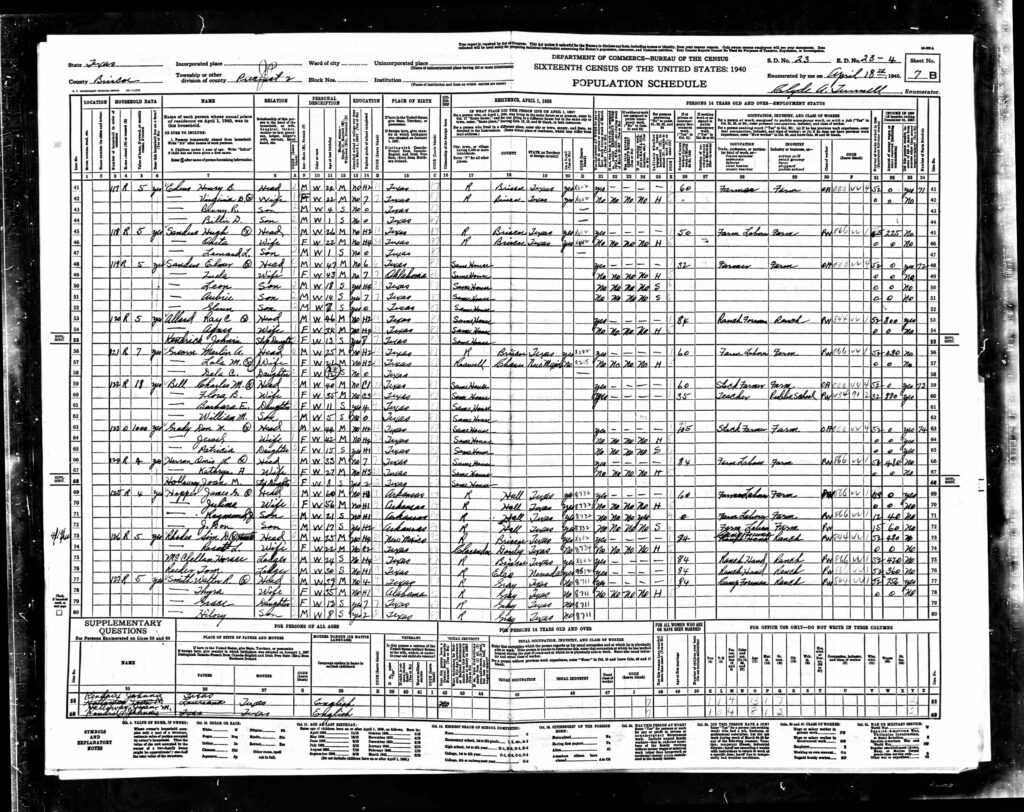
Census records require that we look beyond “town” names. Antelope Flat may appear as a precinct, a school district, a road name, or a farming community listed under a nearby town (Brice, Clarendon, Lakeview). The records were gathered by enumeration districts rather than place names. Those boundaries often reveal communities that maps forgot.
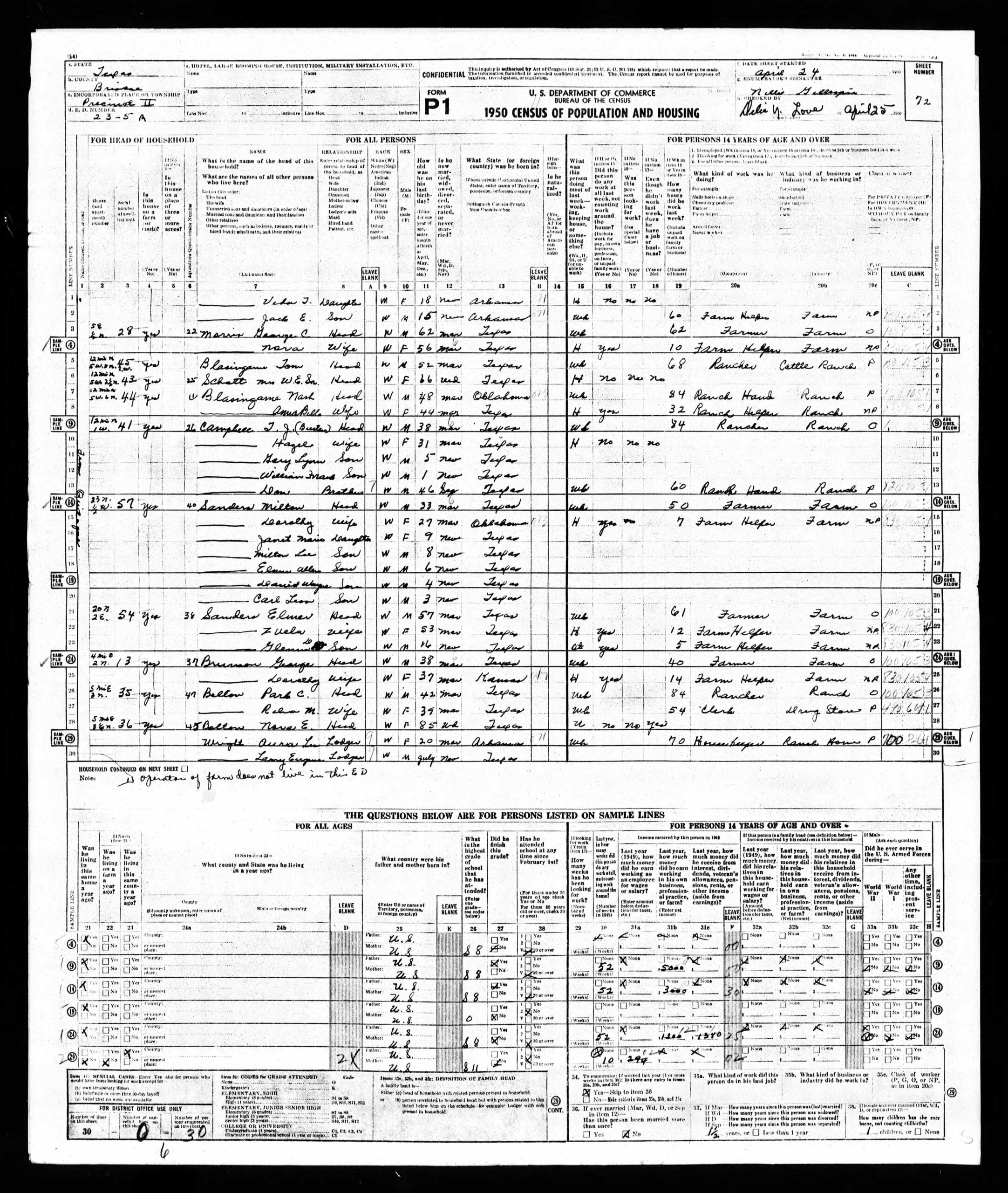
Across 1920, 1930, 1940, and 1950, we are not seeing scattered appearances. We are seeing stability. Key confirmations of this are are same family names, same occupational patterns (farmer, farm laborer), same rural precincts, and no urban interruption. This is not a family passing through Antelope Flat. This is a family rooted there. The identification of Elmer Hugh Sanders (1920 line 62, 1930 line 36, 1940 lines showing three generations, and 1950 line 21) creates a 30-year vertical slice of place-based continuity. That’s rare and powerful whether or not it shows up on maps.
The draft registration does something census records cannot do. It ties identity to self-reported location. It is contemporaneous, it is functional because (the government may have needed to find him). “23 miles NE of Silverton” was not poetic — it was logistical truth. This single card collapses doubt about where the family lived, what they called it, and how they oriented themselves in space.
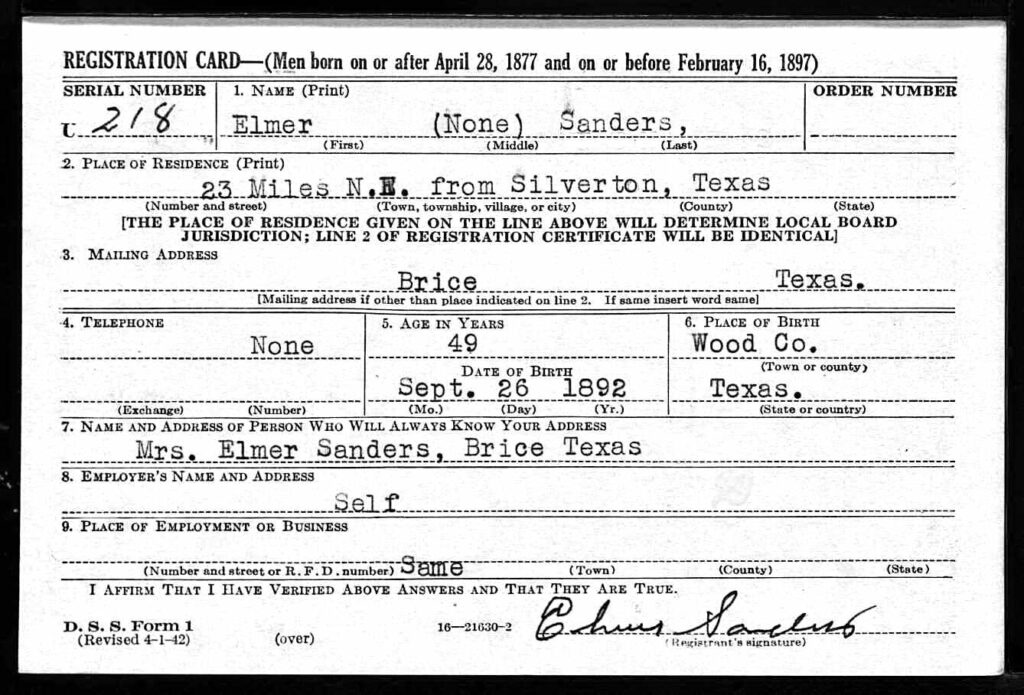
23 miles northeast of Silverton. That was enough for the census taker. Enough for the draft board. Enough for a family to build a life that did not require permission to exist.
The draft registration notice also shows the place of residence to be on one side of the river (Antelope Flat, south side) and the mailing address to be on the other (Brice, north side).
Next dirt roads to travel:
There are places that never learned how to stay on a map. They lived instead in directions. Named by distance, memory, and need. 23 miles northeast of Silverton.
23 Miles NE of Silverton
Baseball teams in places like Antelope Flat served multiple roles: Recreation, reputation, and inter-community bonding.
Antelope Flat Baseball Team
Gas pumps with hand pumps and glass measuring gauges, known as Visible Gas Pumps, worked by manually pumping fuel into a large, calibrated glass globe atop the pump.
Antelope Flat commerce