The Gas Station
The Gas Pump
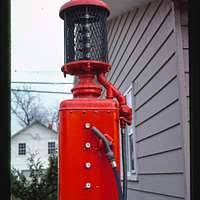
Gas pumps with hand pumps and glass measuring gauges, known as Visible Gas Pumps, worked by manually pumping fuel into a large, calibrated glass cylinder (globe) atop the pump. This let customers see the quality and quantity, and then using gravity to drain the measured gas into their vehicle’s tank. These devices dominated from the 1910s to the 1920s before electric pumps took over. It lingered into the late 1940s in rural areas where electricity was absent.
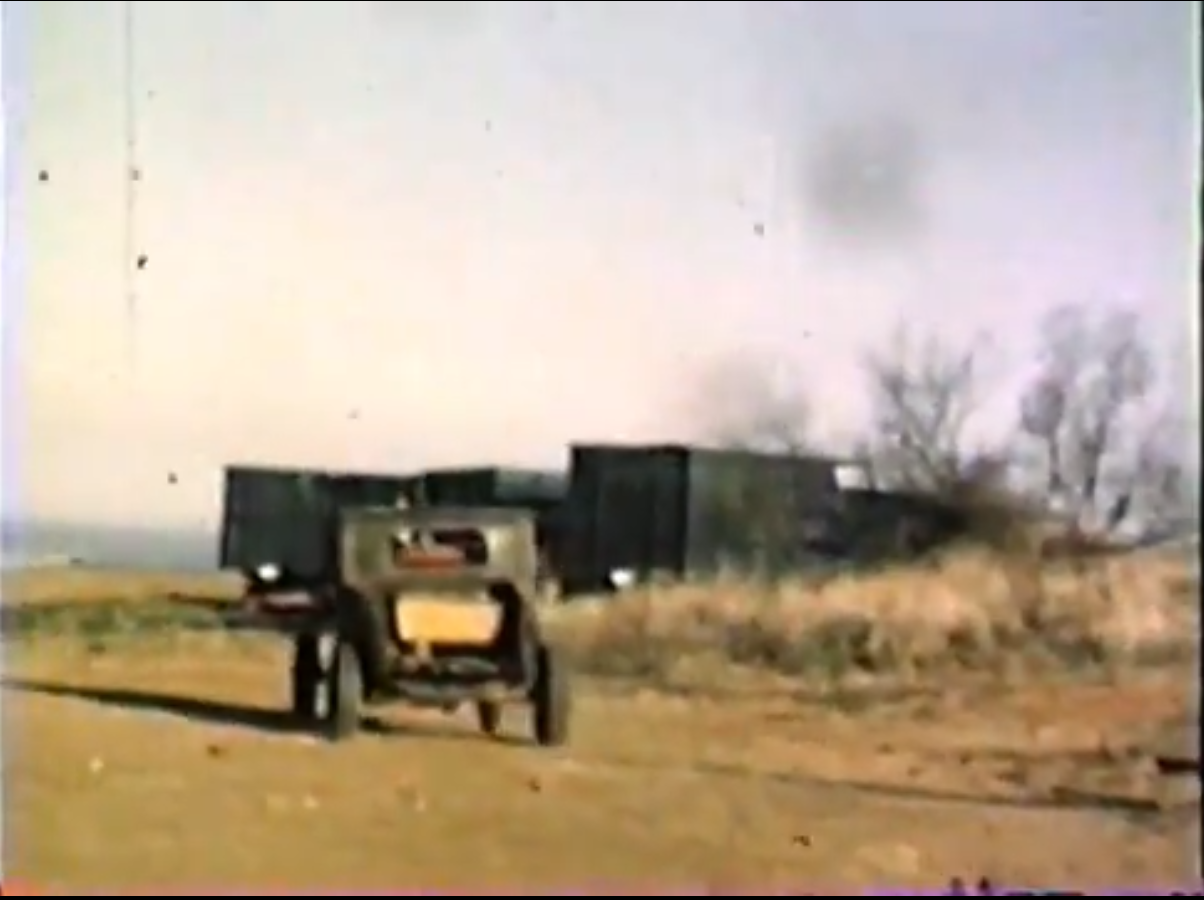
The fact that Antelope Flat still used gravity-fed pumps, measuring bowls, and gas buckets tells us two important things. There was no abundant grid electricity, and traffic volume was low but steady enough to justify fuel. That aligns perfectly with a bridge crossing, agricultural traffic, farm families, and school attendance. Once the bridge washed out — the need for gasoline at Antelope Flat collapsed.
How They Worked
An attendant would use a hand lever or crank to pump gasoline from an underground tank up into the tall, clear glass cylinder (globe). The globe was marked in gallons, allowing drivers to watch the fuel level rise and confirm they were getting the amount they paid for. Once the desired amount was reached, a valve was opened at the bottom of the globe, and gravity would send the gas down a hose into the car’s tank. The clear glass also let customers see if the gas was clean or dirty, a big advantage over early methods.
Key Features
- Glass Globe: The defining feature, holding 5-15 gallons, was a visual display.
- Hand-Operated: Powered by a manual crank, not electricity.
- Gravity Flow: Relied on gravity for dispensing after measurement.
Next dirt roads to travel:
Gas pumps with hand pumps and glass measuring gauges, known as Visible Gas Pumps, worked by manually pumping fuel into a large, calibrated glass globe atop the pump.
Antelope Flat commerce
TX-256 is a state-maintained connector, upgraded mid-century. It crosses the Prairie Dog Town Fork of the Red River, and was rebuilt earlier than many county roads.
Highway 256 Bridge
There are places that never learned how to stay on a map. They lived instead in directions. Named by distance, memory, and need. 23 miles northeast of Silverton.
23 Miles NE of Silverton